Showing posts with label olympus OMD EM5. Show all posts

Tuesday, 31 December 2013

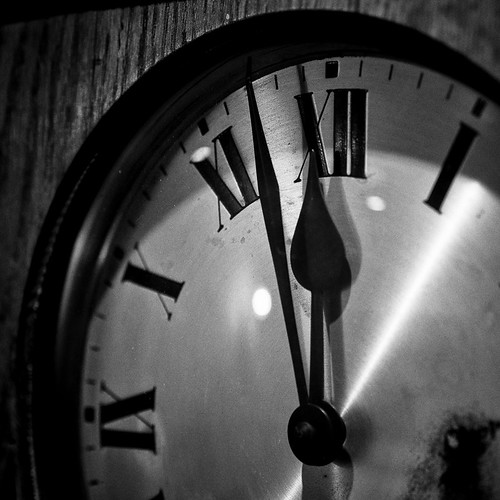
Another year over……

It's the last day of 2013 and tomorrow it will be 2014.

Another year over….. a new one about to begin.

20131231-_C310075-Edit.jpg


Inevitably it's at this time of year when we all reflect on what has happened in the past 12 months and start to look forward to what we might hope to do and achieve in the next 12 months. From a purely personal point of view 2013 will never be forgotten and I have already been mentioned the reasons why in an earlier entry called 'Three Crosses'.

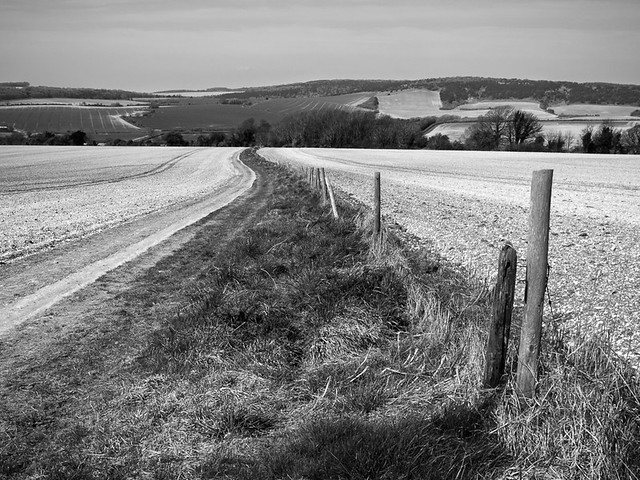
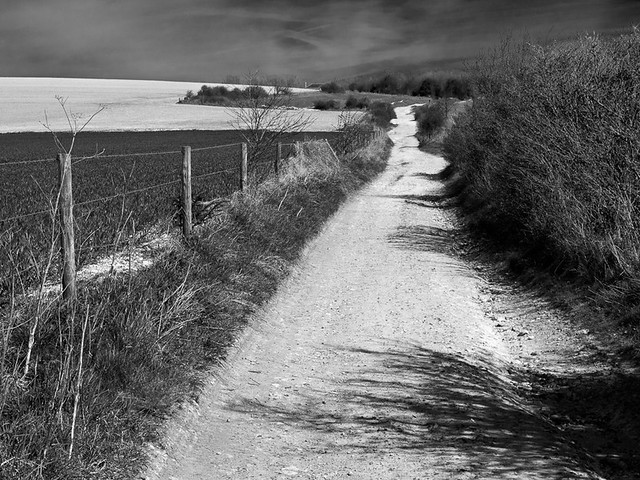
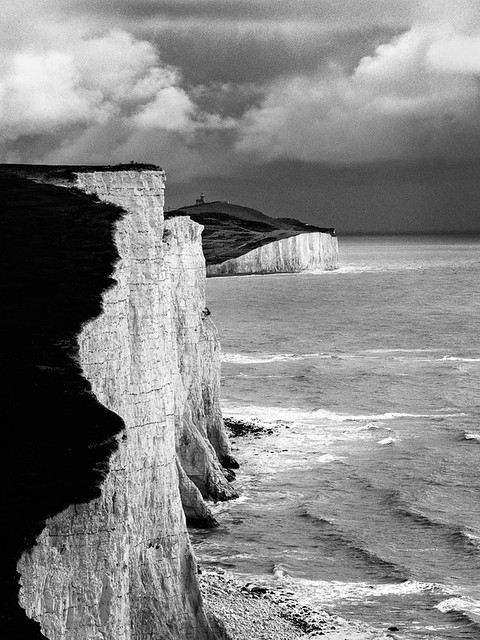
On a happier note in September I realised a long held personal ambition and walked the South Downs Way with my nephew from Winchester to Eastbourne - a total of 100 miles. This was never intended to be a photographic expedition, but the camera came out on a regular basis so I was able to capture the beauty of this part of the world.
Seven Sisters
The Seven Sisters
The 'home' straight of The South Downs Way
 
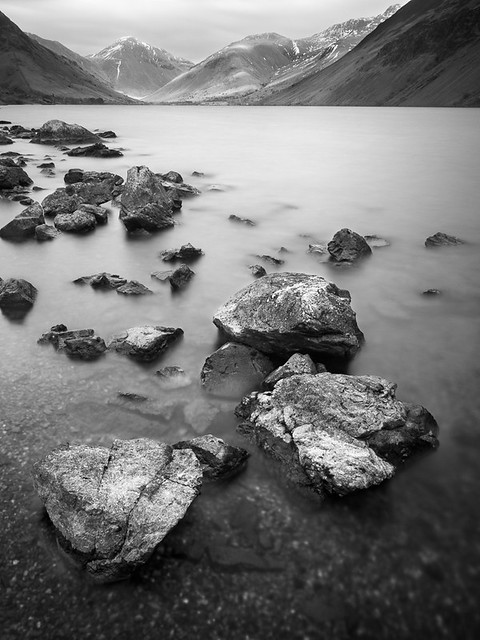
I do not think that I have spent as much time developing my photography this year as perhaps I would have wished but I do believe my work has continued to improve. I certainly learnt some new techniques and skills when I spent a few days in the Lake District in the company of Paul Gallagher and many of the images made during this time have given me a great deal of pleasure.

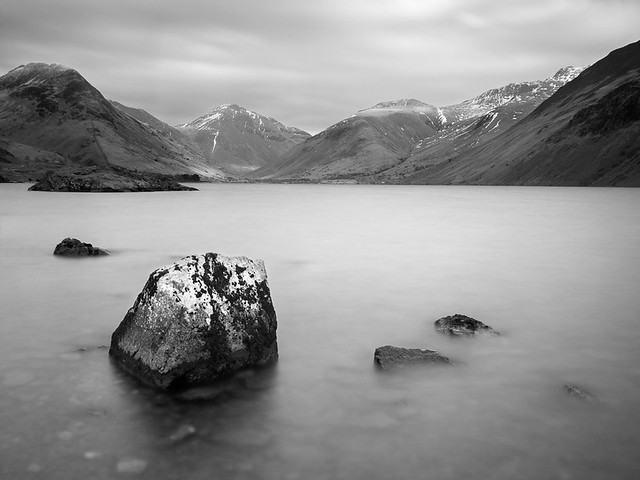
Wastwater Rocks
Wastwater in The Lake District

If my Flickr stats are anything to go by I have certainly continued to take a good number of images and in the process I have endeavoured to take a more creative approach, a trend which I am sure will continue into 2014. Almost without exception all of my photographs this past year have been in monochrome. I expect this will also be the case next year, but who knows, colour may start to feature.

And so to 2014. In the last few weeks I have been giving some time and thought to what I would like to do phtographically in the next 365 days, so here goes!

1. More photographs and less 'GAS'! (Gear Addiction Syndrome - to the uninitiated)

I have to admit that I spend a lot of time reading reviews about the latest camera equipment, particularly cameras, their makers lenses and the pros and cons of one system over another. It's all very interesting and I have found that the internet is full of very opinionated people which makes for good reading. On the downside 'GAS' can be very expensive and as I have often said in the past, it is the photographer who makes the image, not the equipment.

A famous quote by Ansel Adams reads - "The most important component of the camera is twelve inches behind it." Enough said!

I am fortunate to have some excellent equipment so I shall be using what I have and try not to fantasise about what I don't have. It wastes time which could be better spent taking more photographs, improving my processing techniques or studying the work of more talented photographers. This research into other cameras and lenses has though helped me decide on my system of choice for the future which brings me on nicely to my second point.

2. It's time to ditch the Nikon gear

In the past year I have been using two camera systems but during this time I have found that only one system really works for me and the other frankly does not.

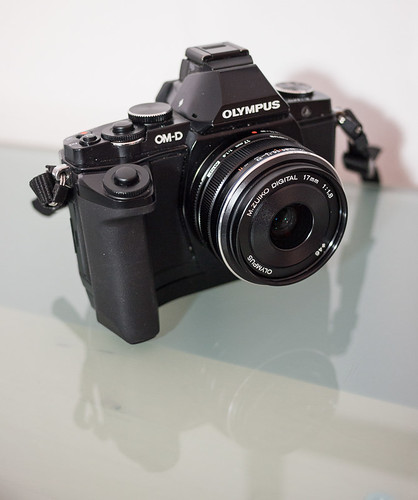
When I first became serious about photography I started using a Nikon APSC DSLR and various lenses, but since buying the Olympus OMD EM5 some 18 months ago, together with some truly excellent lenses for the Micro 4/3rds system, the Nikon gear has been gathering dust. So after much deliberation it's time to say good bye to Nikon.  All of the equipment has been packed away in their original boxes ready for sale. In its place I will be investing in the new Olympus OMD EM1, the first truly professional specified camera for Micro 4/3rds. I will probably also add a couple of prime lenses to my collection and keep the EM5 as a spare body. Luckily these two cameras share the same battery which is an advantage.

20131025-PA251646.jpg
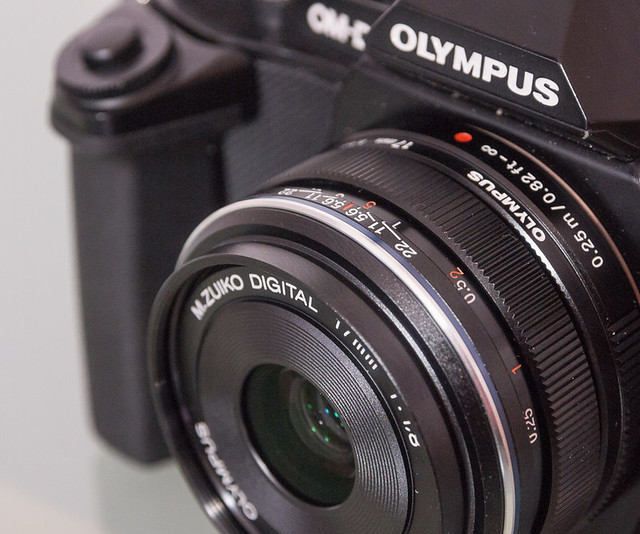
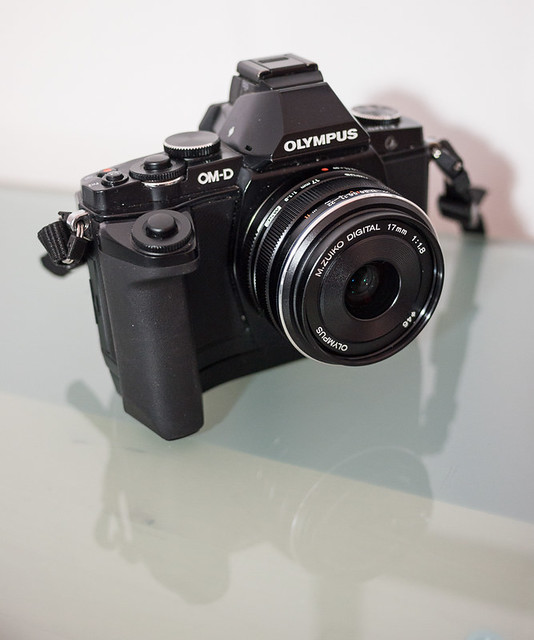
The Olympus OMD EM5, and Olympus 17mm f1.8
My system of choice for 2014

3. Work on a project

Since achieving my LRPS Distinction in December 2012 I have been saying to myself that I must start to concentrate on a specific genre of photography and quite probably a specific subject or theme. It did not happen in 2013 but I plan to change that in 2014. I believe this approach will both hone and enhance my skills and in time provide me with a portfolio which I might want to consider as an appropriate panel of work for an ARPS submission. This plan also leads me to my next point.

4. To publish a book

This sounds rather grand but in truth you can 'self publish' a photo book pretty easily these days using one of many online publishing companies. I have already considered two possible suppliers - Blurb and Bob Books. I have downloaded their software which is required to design the book. I shall compare these and others before making a final decision as to which to use, taking into consideration, possible book sizes, paper, quality of reproduction, the software itself and of course the cost. I may even decide on a couple to 'test runs' with both companies of the same series of images to see which I prefer.

5. And talking of publications

There are many photographic magazines and to date I have never submitted any work for publication, so this has to be on my wish list for 2014. If it were to happen then yes of course the publicity would be great  but my incentive is a very simple one - an acknowledgement that my work is considered good enough to appear in a magazine. Now that would be fun!

6. Visit more locations specifically to take photographs

I do find that being an enthusiastic amateur photographer requires both time and concentration. This can best be achieved when I am on my own as this gives me the chance to really think about what I am doing. Photography is also about expressing your feelings through a finished image. To accomplish this aim I believe you have to be able to recognise how you feel at the time of taking the shot - again, I can't see how this can happen if you are not alone. This sounds very selfish but I am sure other photographers, artists or authors would all say the same thing. All of which makes me think that to improve my photography not only do I need to devote more time but I also need to be in a place on my own without any distractions - just me, my camera and the subject in front of me. Where and when shall I go?  Well that I don't know but I am looking forward to coming up with some answers.

7. Take inspiration from other artists

This is not really an objective, but a recognition that there is so much to learn from other artists not just other photographers. Going to exhibitions or galleries, reading books or watching television programmes about other artists are all good sources of inspiration.

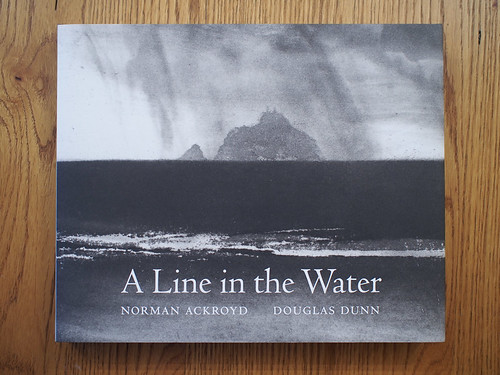
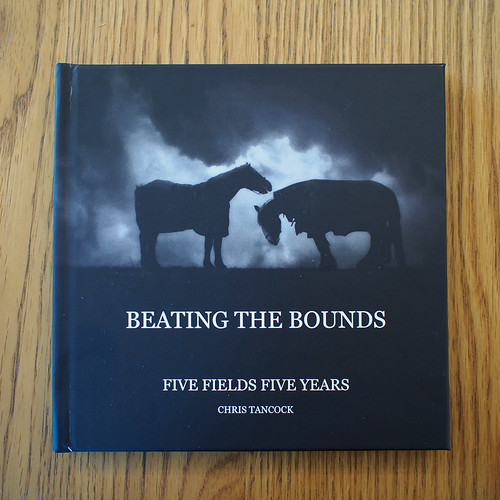
At Christmas I was fortunate to have been given three books which I know will inspire me in the future. I was given two 'self published' books by the Welsh photographer Chris Tancock, one called Beating the Bounds, the other named Wildwood. He calls himself a 'rural documentary photographer' not a landscape photographer. If you look at his images on his website I think you will understand why.

20131230-_C300067.jpg

Another person who's work I greatly admire is Norman Ackroyd CBE RA. As a landscape artist and printmaker he captures the meeting of the land and the sea in atmospheric aquatint. His book 'A Line Above the Water' is a wonderful collection of his work coupled with evocative poems by Douglas Dunn.


20131230-_C300060.jpg


I can now draw this post to a close. My summary of the year was short but complete and my ambitions for 2014 have been listed. In twelve months time I will know whether or not the wish list was too long, I doubt it is too short!

And finally my favourite image from 2013 is -
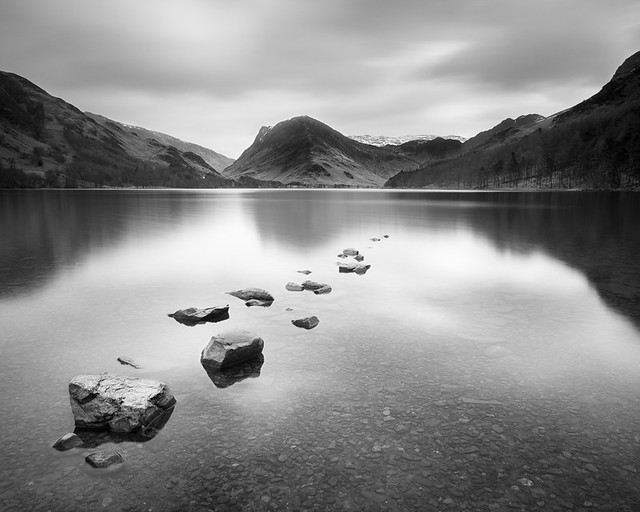
Buttermere
'Solace'
Buttermere in The Lake District

May I wish everyone who reads my blog a very happy, peaceful and healthy New Year.

Friday, 25 October 2013

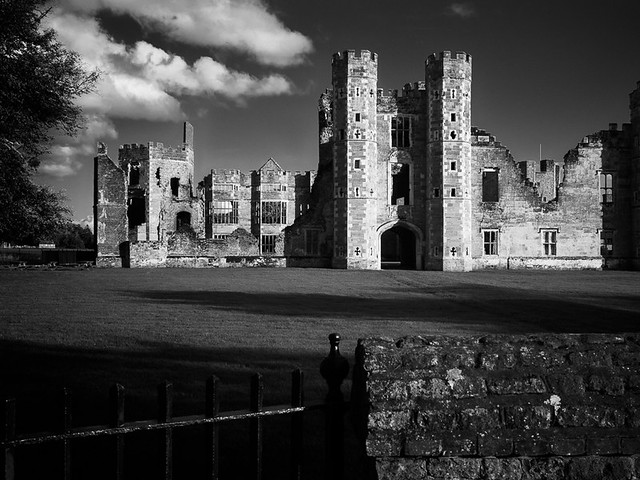
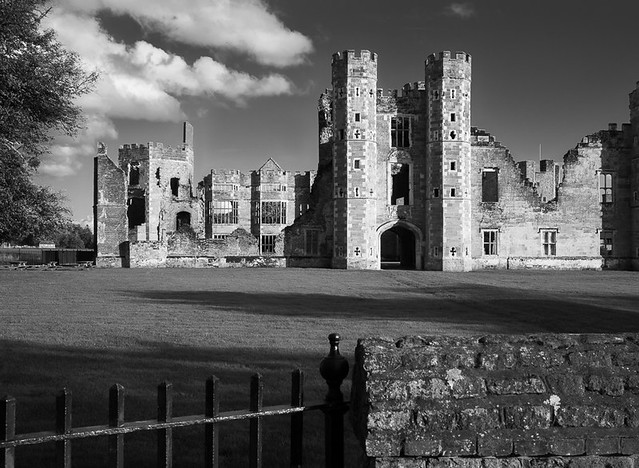
Olympus 17mm f1.8 lens at Cowdray Ruins

Cowdray Ruins
Cowdray Ruins

Faced with the choice of having just one lens what would it be? A prime lens or a zoom lens? If it had to be a prime lens then the vast majority of photographers would choose a focal length of either 35mm or 50mm. The latter is closest to the same field of vision as the naked eye, whereas a 35mm lens is a moderate wide angle. Both are very versatile but of the two my personal choice would be a 35mm lens.

I use a micro four thirds camera, the Olympus OMD EM5, which has a crop factor of x2, so the equivalent focal length for this camera format is 17.5mm. Although I can cover both 35mm and 50mm full frame focal lengths using the Panasonic 12 to 35 f2.8 zoom lens, there is nothing quite like having a compact, fast and sharp prime lens attached to the camera. Any prime lens encourages a more creative approach to photography. You have to frame your shot by moving your feet as opposed to twisting a barrel on the lens. A wide aperture can give a more limited depth of field, throwing backgrounds out of focus. In this respect it will never be a match for a full frame camera, but for my requirements this lens more than serves its purpose.


20131025-PA251656.jpg
The Olympus 17mm f1.8 prime lens

So in the past few days I decided to buy the Olympus 17mm f1.8 lens. In no way is this a review, but the all metal lens in black looks wonderful on the camera, is very fast to auto focus and has a ring which can be pulled back for manual focusing. It also reveals a distance scale which combined with the Depth of Field markings allow 'zone focusing', a technique often used by street photographers.


20131025-PA251646.jpg
The 17mm on the Olympus OMD EM5

Having only had the lens for a few days I have not yet had the chance to put it through its paces but I already think it could well become my default choice when I want to travel light with just the camera and a single lens.

I did though have the opportunity to take a couple of shots of Cowdray Ruins in Midhurst. I set the camera to take both RAW and JPEG (Fine). Set to f8, ISO 200 and a shutter speed of 1/250th of a second, the JPEG straight out of the camera is I think very pleasing. Sharp across the frame and good colours from the Olympus processor.


20131023-_A230168.jpg
Cowdray Ruins - JPEG straight out of the camera

The RAW version was of course just asking to be converted to black and white.......


Cowdray Ruins 1.jpg
The first mono version


20131023-Cowdray Ruins 2-2.jpg
This is the same image as the one at the top of this post
but with a 'coffee' tint added in Silver Efex Pro2

Of the four versions I have my own personal favourite (it's at the top for a reason) however this post was intended to be about a superb lens which I know will give me many hours of pleasure in time to come. With luck I will get out and about in the next few days to see just how capable it is in different conditions.

As an aside the Ruins at Cowdray in Midhurst, West Sussex are truly magnificent and I will definitely be returning to explore the photographic opportunites at some point in the future. 

Monday, 22 April 2013

A walk from East Lavant to The Trundle

It was such a beautiful morning on Sunday that I decided to take a circular walk from the West Sussex village of East Lavant to the Trundle at Goodwood and then return to the village via Chalk Pit Lane. Whilst I did not go out specifically for photography, I fully expected to stop and take one or two images in the lovely downland countryside to the north of Chichester.

I wanted to 'travel light' so I simply took the Olympus EM5 and two Panasonic zoom lenses - the 12-35mm and the 35-100mm, both of which have a constant f2.8 aperture. Packed away in my Billingham Hadley bag with a bottle of water and an OS Map (just in case), I had everything I would need to enjoy the walk.

The only other essential was my iPhone; not so that I could make or receive calls or emails but to use an App called Walkmeter. This great exercise App would plot my route on a map, tell me how far I had walked, my pace and also ascent and decent distances. Yes, I admit to liking gadgets but this particular App is going to be an important tool in the weeks and months ahead, as I have decided to walk the length of the South Downs Way later in the year. The Way is approximately 100 miles long, and walking West to East, it starts in Winchester and finishes in Eastbourne. Whilst I enjoy walking I don't consider myself to be that fit, so expect some more blog entries in the future about walking in the South Downs National Park coupled with photographs of my travels. It should be fun!


Hayes Down looking West
Looking west from Hayes Down


Hayes Down post
An old post alongside the footpath which runs across Hayes Down
between the River Lavant to The Trundle


Chalk Pit Lane
A chalk path leading to The Trundle from East Lavant - aptly named Chalk Pit Lane


Hayes Down from Chalk Pit Lane
A view over fields from Chalk Pit Lane 


Church of St Mary East Lavant
The Church of St Mary in East Lavant, close to the start of the walk.

For the record this circular walk is 4.75 miles long and in actual walking time it took about one hour and thirty five minutes. In reality it took quite a bit longer as I did stop from time to time to take some photographs!


Monday, 1 April 2013

Easter inside Fishbourne Church

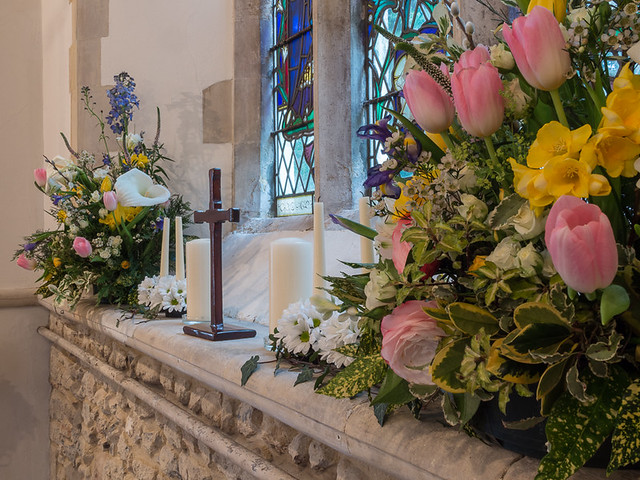
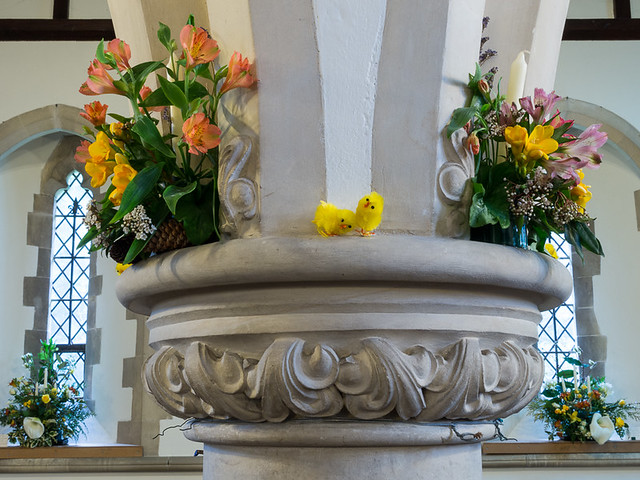
In a departure from recent entries, I could not miss the opportunity to record the glorious interior of our local parish church at Fishbourne near Chichester in West Sussex, which was decorated with some quite stunningly beautiful flower arrangements this Easter. I wanted to photograph the work of many wonderful and gifted volunteers, as well as having a few images which could be published in the next edition of our Parish Magazine.

All the photographs were taken using the Olympus EM5 and Panasonic f2.8 12-35mm zoom lens, mounted on a Gitzo tripod and ball head.


Fishbourne Church at Easter
The east window behind the altar of Fishbourne Church


20130401-P4010034.jpg
All the pillars were decorated with flowers and Easter chicks!


20130401-P4010059.jpg
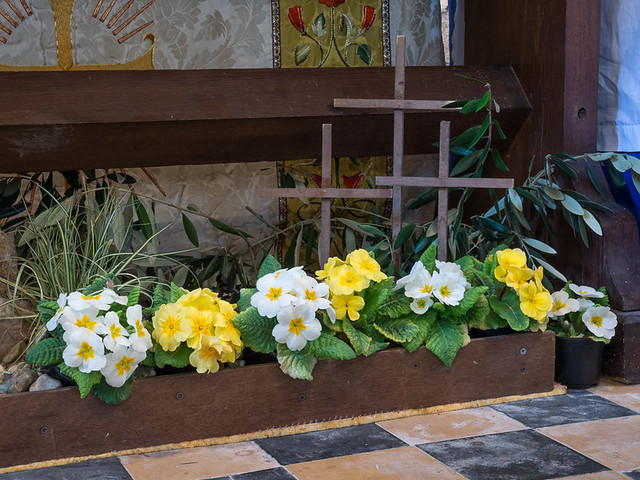
Crosses and primroses beneath the altar


20130401-P4010064.jpg
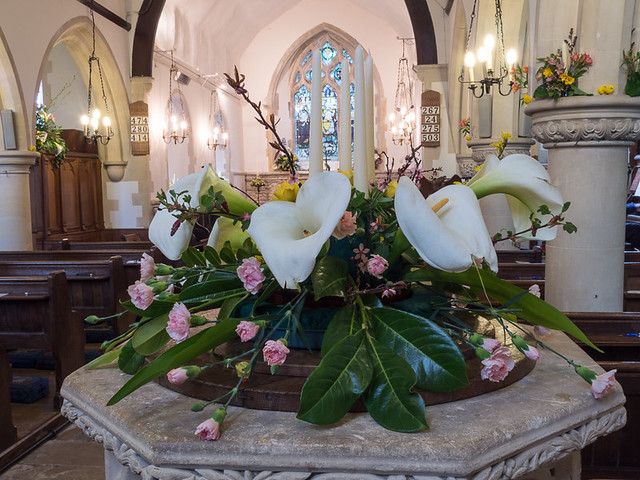
A floral decoration on the font

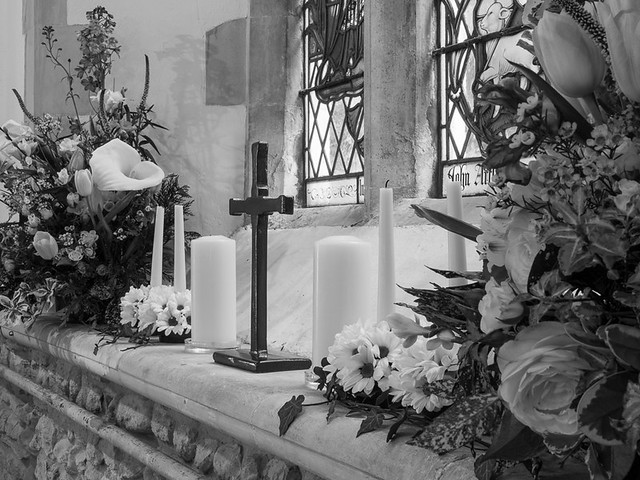
.....and just because I can't resist the temptation, I have converted a similar image to the first photo in this entry to mono. Although the beautiful colours have been removed there is still something about the black and white version.

Fishbourne Church at Easter - in mono


Friday, 15 March 2013

Lake District 121 - camera technique at Wasdale Head

On the first morning of my 121 workshop with Paul Gallagher in The Lake District, Paul was keen to establish my camera technique and the typical settings I used. He was not familiar with the Olympus OMD EM5, as he used a Nikon D800E for his digital work, although his preferred system of choice is medium format 5 x 4 Ebony film camera which I was to see in all it's glory a few days later.

We decided to drive to Wastwater and Wasdale Head.

Wastwater
Wastwater - looking towards Great Gable

I explained that for landscape work I would use the lowest ISO setting available. In the case of the EM5 this was ISO 200. I would also use Aperture Priority. This way the shutter speed would be automatically selected by the camera. I explained that by using 'live view' on the OMD, I would preview the image by showing a 'shadow and highlights' warning; flashing blue for underexposed areas and flashing orange for overexposed areas or blown highlights. I would then use the exposure compensation dial to make any adjustments in order to balance the exposure. If the dynamic range of the shot was too great for the camera sensor, then it might require the use of a neutral density graduated filter to balance the exposure of say a bright sky with a dark foreground. I told him I would tend to rely upon the camera's auto focus, rarely resorting to manual focus.

Believing this was a tried and tested way of taking landscape photographs I was a little taken aback when Paul suggested that it would be much easier to use manual settings for the exposure and to always focus manually. He went on to explain that by setting the aperture to say f11 or f16 to maximise the depth of field, the shutter speed could be adjusted to obtain the optimum exposure setting using the histogram as a guide. He was fully in favour of exposing to the right, but suggested that the histogram should not be right on the point of clipping the highlights, as this would leave no room for finer adjustments when it came to post processing. This made perfect sense to me and the exposure compensation dial would no longer be needed. If the histogram was not acceptable, a quick change to the shutter speed would bring about the desired result.

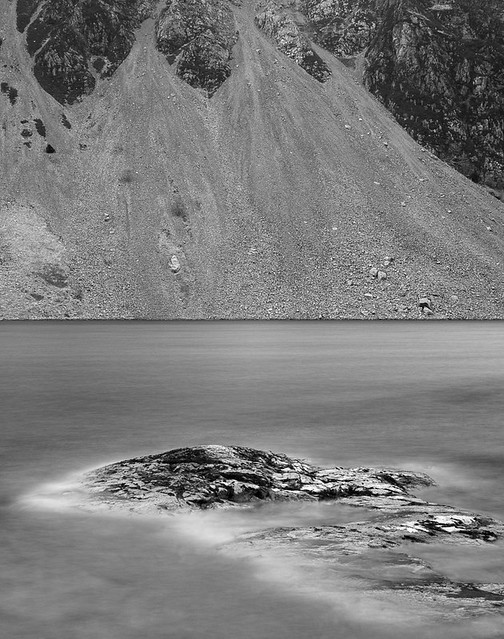
Wastwater screes
Looking across Wastwater to the Screes

Manual focusing is very straightforward with the EM5. Again in using live view, the instant the focus ring was turned on the lens, the screen would magnify the area of view by a factor of 5x. The amount of magnification can be changed in the settings menu. Using the arrow keys on the back of the camera it was easy to select an area of the composition where pin sharp focusing was critical. This would normally be a subject in the foreground. Having preselected a small aperture opening the depth of field should ensure that the background at infinity would also be in sharp focus.

With the camera on the tripod I used the 2 second timer function so that I could press the shutter button and eliminate any camera movement which would spoil the image. Further I turned off the in camera Image Stabilisation as this can 'fight' the lack of movement of a camera mounted on a tripod and try and 'compensate' for movement when none is actually present. Don't ask me  how or why, or for a technical explanation, just turn the IS off if using a tripod.

Paul was less concerned about setting the aperture to the optimum opening for the lens, which in the case of some my lenses would be f5.6, as this would rarely give the desired depth of field. Don't worry about using a much smaller aperture he said. It's more important that all parts of the image are in focus, even if the lens was not at its very sharpest aperture setting. Again this advise made perfect sense, so I was already benefitting from his knowledge and expertise and it was still only day one.

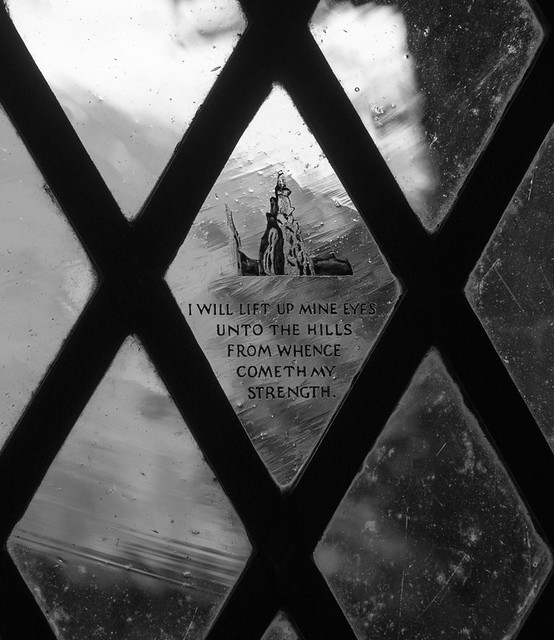
With photography over for the day but before heading back to our hotel in Keswick, I visited one of the smallest churches in England - St Olaf in Wasdale Head. This church holds special memories for me and in particular the inscription in the glass of a leaded light window. The words are taken from Psalm 121 and the etching is of Napes Needle on Great Gable. A fitting memorial to all mountaineers and climbers who have visited this beautiful part of the world.


20130222-P2220114.jpg
The etching and inscription in St Olaf Church at Wasdale Head


Monday, 18 February 2013

Losing weight with the Olympus OMD EM5

A few weeks ago I made the decision not to invest in a full frame DSLR and associated lenses and to stick with my Olympus OMD (which I love) and various Olympus prime lenses or fast Panasonic zoom lenses.

I don't need to justify my decision but for a bit of fun I thought I would make one comparison  between the two systems - and that's one of weight. Many will argue that I am comparing apples with pears and I will be the first to agree that both sets of camera gear have their pros and cons. However the weight of any set up has to be taken into consideration if you intend carrying your equipment any distance or for long periods of time.

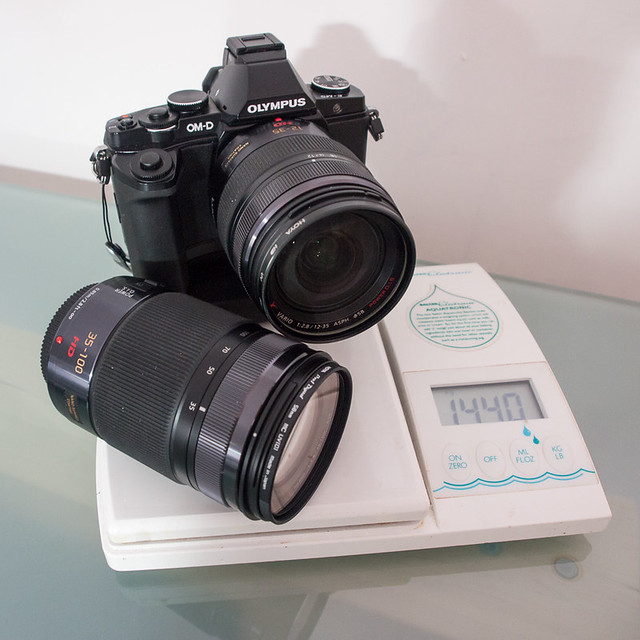
It's not very often that I need to use the kitchen scales(!) but out they came.... and now for the results -

Losing weight with the Olympus OMD EM5

The Olympus OMD EM5 with two part battery grip plus Panasonic 12 - 35 and 35 - 100 lenses with constant f2.8 aperture = 1,440g

....and for the full frame equivalent.

Canon 5D MKIII, with battery grip and 24 - 70 and 70 - 200 f2.8 L lenses = 3,555g

So the Canon system is very nearly 2.5x heavier, not to mention bulkier, and far more expensive.

Both sets of lenses cover the same focal length and  are weather sealed. Yes, I know the Canon set up will produce bigger files and therefore give better results, but for my needs and in real world use I'll save my back and my bank balance thank you! :o)


Saturday, 16 February 2013

Something completely different

My approach to land and seascapes is I think a fairly traditional one and it's an approach that works for me. However I do see lots of black and white images using slow shutter speeds and taking a more minimalist view of the landscape. Concentrating on a small area can often result in something which has an abstract 'feel' to the image. Accordingly there are few if any reference points and little or no sense of scale. I guess this results in the viewer trying to discern what they might be looking at, a sense of mystery perhaps, which in turn begs the question - 'what was the photographer trying to say?' when he or she took the shot.

So I thought I would have a go a this approach myself. Its good to experiment, your eyes start to see things differently. Consequently I returned to a particular location as I could pre-visualise a subject matter which might work for this 'new' approach. I also adopted a different technique using a 10 stop ND filter to slow the shutter speed right down. This of course required me to use a tripod which also slows down the photographer. No bad thing in itself as you spend more time composing the shot and getting the right camera settings. The latter was more challenging than the former, as I had never used a 10 stop ND filter before. The Hi Tec filter I was using left a horrible colour cast but this didn't matter quite so much as I knew I would be converting the image to black and white.

Shown below is the result of me trying to do something completely different. A 30 second exposure and I used Lightroom and Silver Efex Pro2 for post processing.

20130215-P2150242-Edit.jpg
Remnants


For my first attempt at this style of photography I am quite pleased with the end result. Is it something I would like to do more of?.......I'm not sure but I enjoyed doing something just a little bit different, well for me anyway.

Oh and if you are wondering, the photograph is the remains of a jetty in Langstone Harbour in Hampshire.

Wednesday, 6 February 2013

Lone sheep in Dorset

It has been so wet in the past few months with very little sunshine, so it was a real treat to be in Dorset a few days ago to experience a lovely winter's day when the sun shone and it cast it's little bit of magic on the rolling hills of this part of the West Country.

As we drove around the Piddle Valley (great name this!), which lies to the north of the County Town of Dorchester, we came across the view below. Bathed in late afternoon sun, long shadows fell across the ground and the backlit sheep added life and foreground interest to this rather archetypal English landscape.

Nothing more to add, just enjoy the view - I know I did.


Lone sheep
Lone sheep


Friday, 1 February 2013

Churches in the landscape - South Stoke

In my last post (Idsworth Church) I touched on the topic of choosing a suitable subject which would inspire me for my panel of images for the 'ARPS Distinction with the Royal Photographic Society. The choice is proving to be quite a challenge in its own right and this is before I start taking any photographs worthy of a submission. Fortunately I am not up against the clock and I will take my time. It's a bit like a driving test and I would like to pass first time, so it will pay me to prepare properly and take as much time as I need before I apply for an assessment date. Between now and then there is likely to be long gap. The selection of a subject or theme is only the starting point. I will need to undertake a lot of research into my chosen topic, particularly if this involves travelling from one location to another, either at home or abroad. I am sure it will involve being outdoors and therefore I am also in the hands of weather and the changing seasons, which could very well determine the success or otherwise of each photographic session. In total the panel is made up of 15 images, which is quite a number when you consider they all need to be of the same high standard; work as a cohesive panel and all conform to the original brief. I will also seek the guidance and critical encouragement (hopefully!) from a suitable mentor or mentors.

Given that I have not yet jumped the first hurdle (the one called subject matter) for the moment its a question of exploring different ideas and seeing what may or may not work. I think I will know when I find a theme which inspires me; for without the passion and enthusiasm for the subject, how can I expect to produce a strong set images? In truth I can't, so until that day comes the thinking and the search goes on.

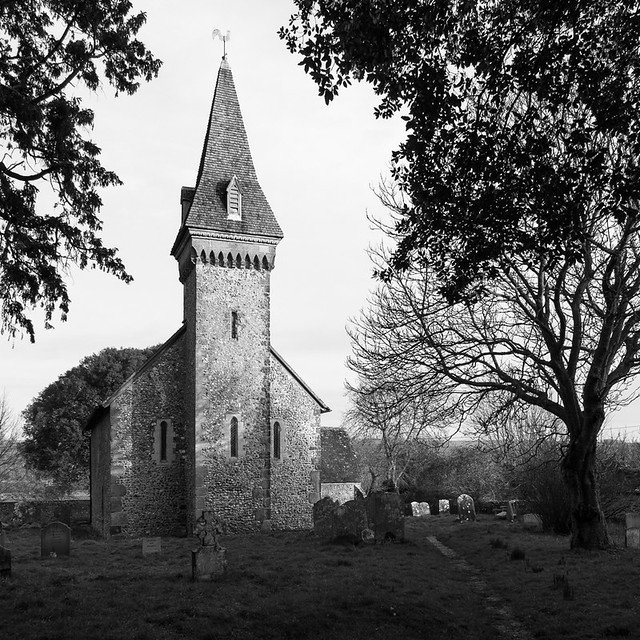
One possibility is 'churches in the landscape' and with this in mind I thought I would head off for a tiny hamlet called South Stoke, which is to the north of Arundel in West Sussex and sits alongside the River Arun. I had never been to South Stoke before, although it is clearly visible from the train between London Victoria from the South Coast.

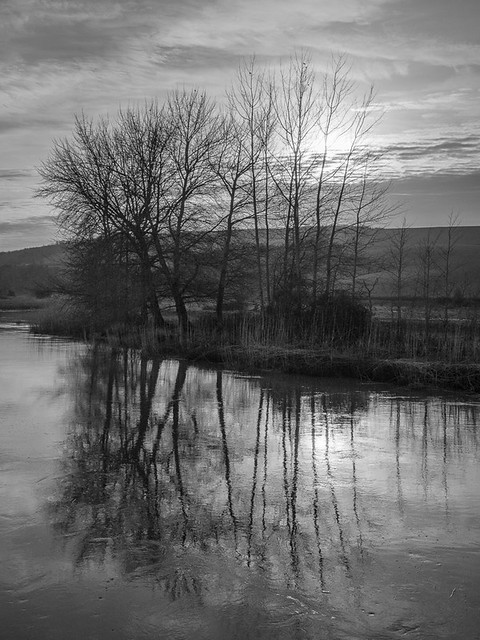
It was a typical winter's day, the recent snow having been replaced by milder, grey and wet conditions. The church is very pretty but the image I had in mind when I studied the map, was of a church alongside the river, did not materialise. The church steeple was visible from the other side of the river bank, but other buildings and trees prevented a clear view of the church itself. However I was not going to leave the location without any images so here are a selection depicting the church and its immediate surroundings.


Winter light on the Arun

South Stoke Church
South Stoke Church

Trees by the River Arun
Trees by the Arun

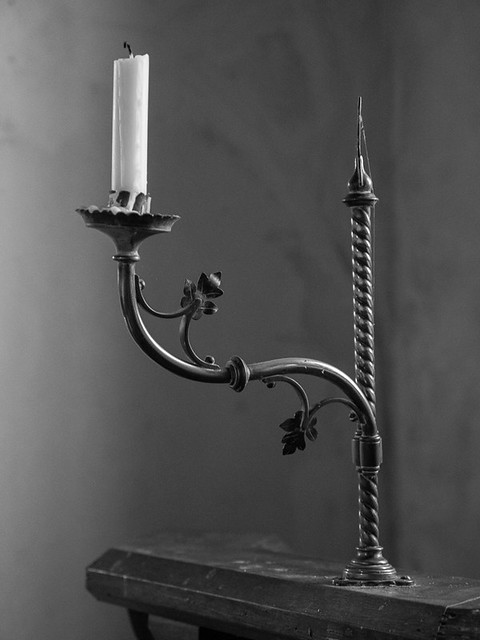
Candelabra in South Stoke Church
Candelabra inside the Church

There was one bonus while I was there - a barn owl. I switched lenses and on its maximum focal length I took a shot. Frankly it was awful and not even worthy of an appearance on this blog. It did make me think how skilled and patient nature photographers have to be, to capture these beautiful birds in flight.


Saturday, 19 January 2013

The first snow of winter

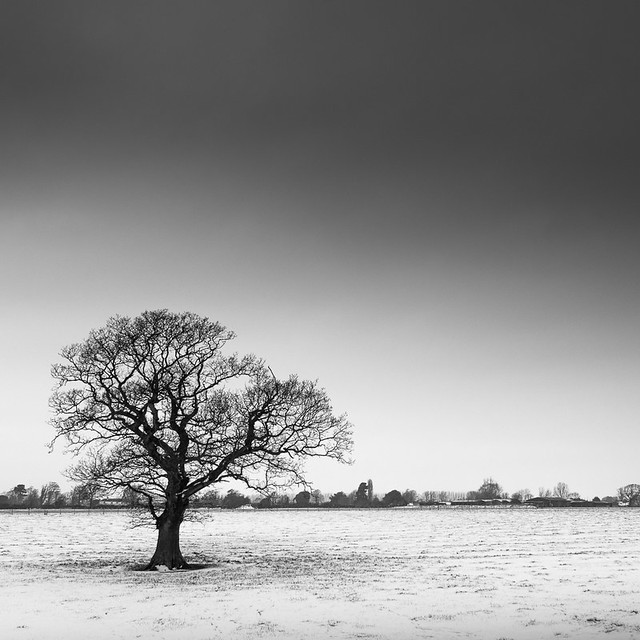
Here on the South Coast of England snow is a relatively rare thing but the weather forecast a few days ago told us of its imminent arrival and on this occasion their prediction came true. On Friday morning the snow started to fall and within the space of a few hours there was a thick blanket of the 'white cold stuff' covering the ground. Tempted to venture out, I decided to wait until the following day when the snow would no longer be falling and it would be easier to get around.

The presence of snow offers the black and white photographer so many opportunities. The grey heavy skies, bare winter trees all contrasting with the pure white snow. Whilst a ray of sunshine would not go amiss to boost this contrast even further, in many ways an overcast sky is easier to handle and adds to the atmosphere of the shot.

The images below were all taken with the Olympus EM5 and my new 12 - 35 Panasonic zoom lens which has a constant aperture of f2.8. This is the first time I have been out with this combination. All other 'gear' was left at home and I have to say in these cold conditions it was a real benefit to have just one lens on the camera. The thought of switching lenses, not to mention the need to take gloves on and off all the time, made for a more enjoyable walk and photographic experience.


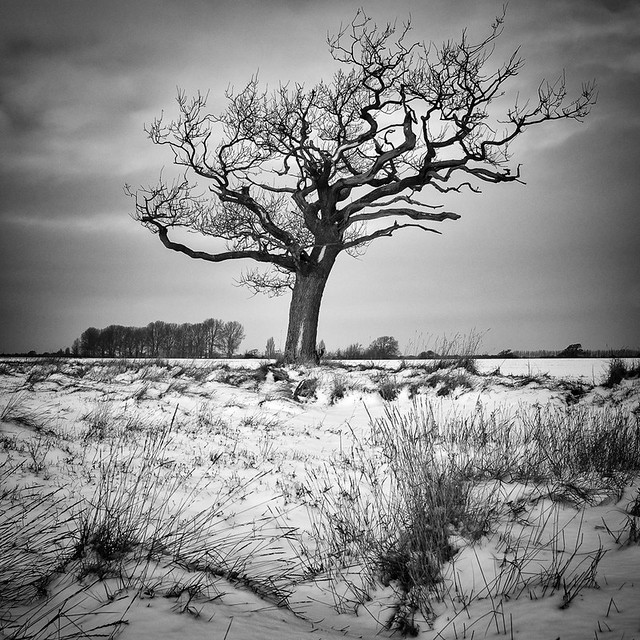
Lone tree
Lone tree


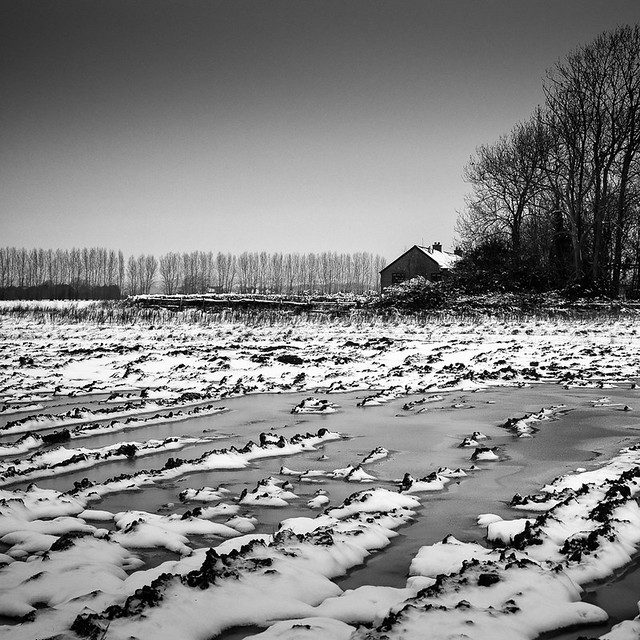
Snow and ice
Field of snow and ice

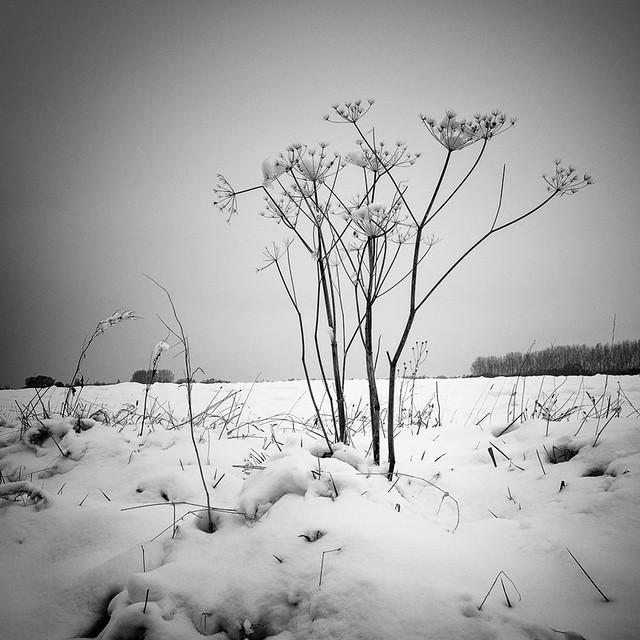
Cow parsley
Cow parsley

20130119-P1190062-Edit.jpg
Skeleton of a tree


Grass in snow
Grasses in the snow

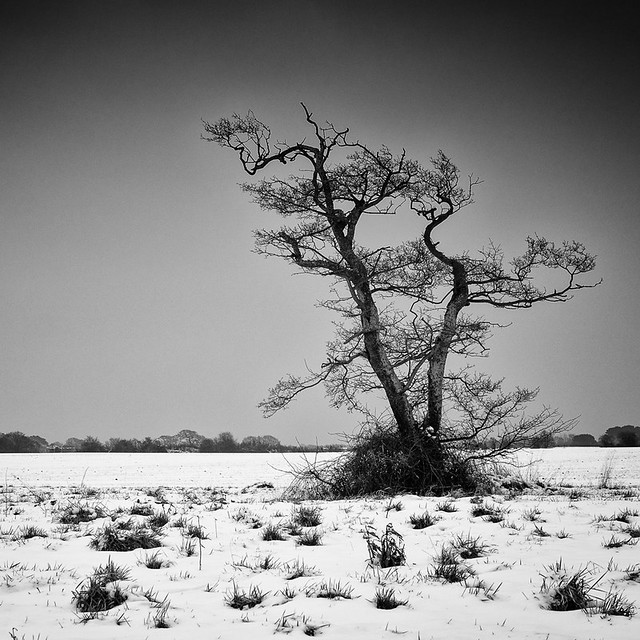
Winter tree
Tree in winter

Sunday, 13 January 2013

Full frame or not full frame?

The new year is now well and truly with us and as I have already looked back on 2012, its now time to look forward to 2013 and make some decisions and plans about what I would like to try and do and achieve in the next twelve months. I will elaborate on my future objectives in another post but for now I want to write about my choice of camera equipment.

As far 'camera gear' is concerned the first decision to make is whether or not to go full frame. This has been playing on my mind for some time, really ever since some very capable full frame DSLRs came to the market superseding older models. Last year Nikon introduced two new full frame cameras, the D800 (and 800E) and the D600. Whilst Canon upgraded their 5D Mark II and introduced the 5D Mark III, as well as releasing the 6D. Since their launch the prices have started to fall, so I know I made the right choice not to do anything the day they first hit the streets. Besides it was only back in the Spring when my high regard for the Olympus Micro 4/3rds system became a reality and I bought the E-PL3, shortly to be followed by the Olympus OMD EM5. For me both cameras, but particularly the EM5, produce great results and given that I do not want to print larger than A3 or possibly A2, why would I need a full frame camera and all that extra weight, not to mention the added expense? Providing you couple the best lenses for the Micro 4/3rds system with the EM5, then for a humble amateur who only shoots for pleasure and not for profit, I am very happy. I ought to add that there are some stunningly good lenses for this system and I am confident that more will be released by both Olympus and Panasonic in the future.

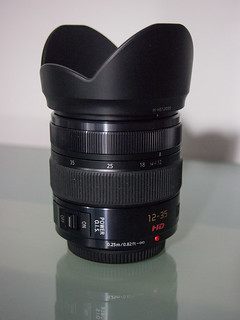
On the subject of new lenses, Panasonic did release two new zoom lenses during 2012, both aimed at the top end of the Micro 4/3rds market. The 12 - 35 f2.8 and the 35 - 100 f2.8. Both are beautifully constructed, dust and splash proof and replicate their 'classic' full frame equivalents of 24 -70 and 70 - 200 with a wide aperture opening of f2.8. Whilst prime lenses are fast, small and very sharp they do require the user to switch lenses on a regular basis to achieve the required focal length. This is fine when you have time on your hands, but a fast zoom lens covering the range of focal lengths offered by these two lenses can't be beaten in certain photographic situations. Yes, the kit lenses are good but they are nothing like as sharp nor as fast. Unfortunately both these lenses come at a price.

20130113-P1131392.jpg
The 12 -35 lens with lens hood attached
20130113-P1131387.jpg
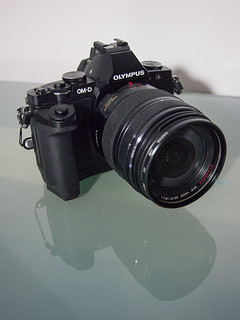
Mounted on the Olympus OMD EM5


Fortuitously luck was at hand when I spotted the Panasonic12 -35 lens in the window of my local camera store. I don't know if it was an unwanted Christmas gift or being sold for some other reason, but it was virtually brand new, and the price heavily discounted compared with the cost of a new one. I took a few test shots outside the shop using my EM5, negotiated down the price a little more, traded in a Nikkor lens that I no longer wanted and the rest is history.

20130113-P1130001.jpg
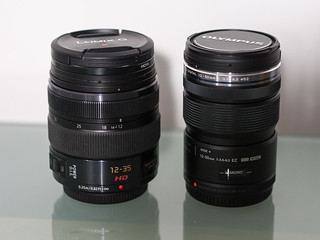
Panasonic 12 - 35 lens compared to Olympus 12 -50 kit lens

First impressions - well its a great lens, much faster and nicer to use than the 12 -50 kit lens, plus it is much sharper across the whole range of focal lengths.. It does suffer from chromatic aberration at 12mm (but I have read this is fairly typical of any zoom lens). With one click in Lightroom it can be removed and as I shoot mainly in black and white its really not an issue. I can't wait to get out and about in the weeks to come and put it to the test.

Of course this purchase has finally put the final nail in the coffin as to whether or not to go full frame. I couldn't wish for a better selection of lenses for my Olympus Micro 4/3rds system. The quality of the results is now down to me taking good pictures, good post processing and not down to the equipment I use. Great images have been taken on old, inexpensive cameras  and I realise how fortunate I am to have what is in my camera bag. So full frame is off the agenda, at least until I win the lottery or I turn professional, neither of which are very likely! So I'm off to take some photographs with my fantastic, lightweight, Micro 4/3rds system which is a joy to use.

Happy New Year!

Friday, 11 January 2013

Reflections on Salisbury

At the end of last week the preview evening for the annual Southern Photographic Federation Exhibition took place in the Wiltshire county town of Salisbury and I thought it woud be a good idea to attend. It's about 60 miles from home so it made sense to me to go there for the day and take a look at the City and its Cathedral. Although I had passed through Salisbury, I had never actually stopped, so I can't say I knew the place at all.

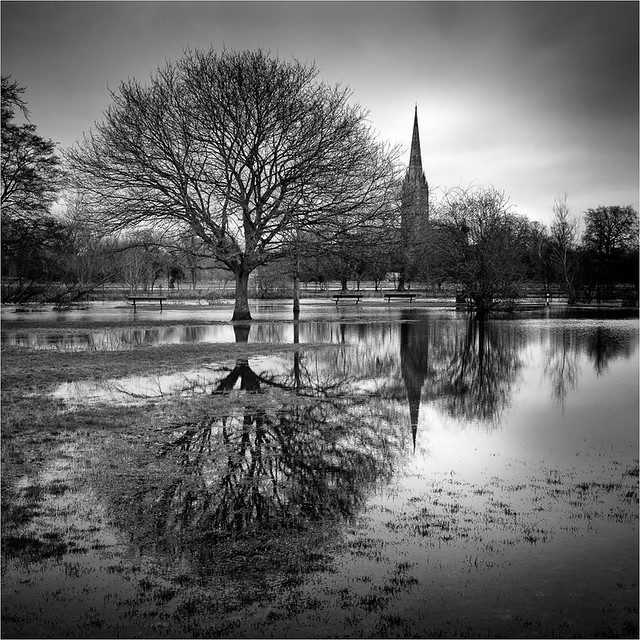
The River Avon passes through the centre of Salisbury and the Cathedral which dates back to 1220, has water meadows to the south and west. In 2012 the UK experienced its second highest rainfall total and it was particularly bad towards the end of the year. As a consequence the river was badly swollen and parts of the water meadows which are normally dry, were flooded. The photo below was taken from, believe it or not, playing fields which adjoin the meadows. You can just about make out three benches in the middle distance which were inaccessible but for a pair of wellington boots or waders.

'Reflection of a Spire'
Reflections of a Spire

Saturday, 29 December 2012

Looking back on 2012

Without any question 2012 has been a good year for me photographically speaking; a year which had a number of highlights, so please forgive me for some self indulgence in the next few paragraphs.

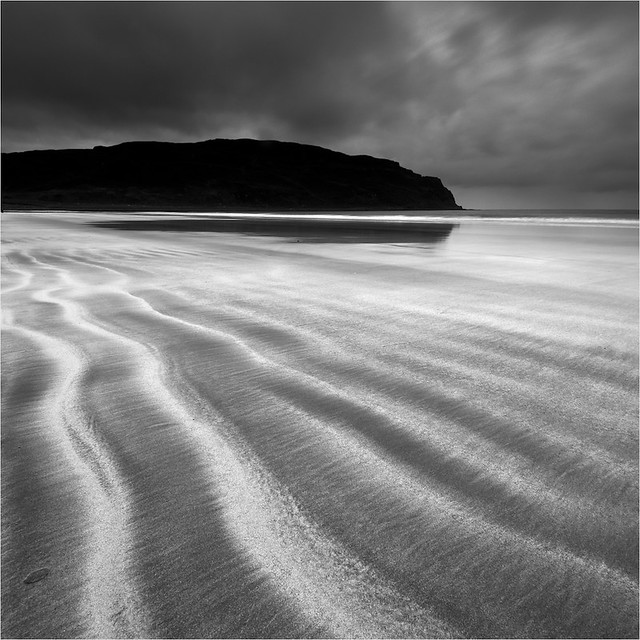
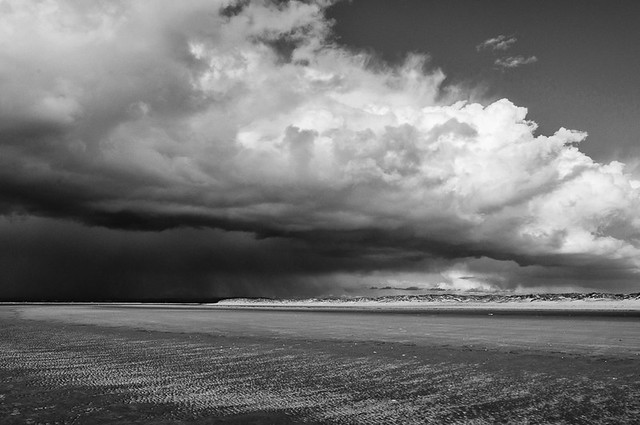
Let me start by selecting my favourite image of the year. It would be all too easy to pick Sand Waves, as I have enjoyed a lot of success with this image during the year.  However it was actually taken on a course with Bruce Percy in September 2011 and therefore it doesn't qualify. So it has to be this one - Storm approaching East Head (shown below). I just love the sky and the last of the afternoon sun lighting up the dunes before the rain arrived. It's perhaps no coincidence that I decided to use a crop of this image to be the header for my forthcoming website.

Storm approaching East Head
Storm approaching East Head at Wittering

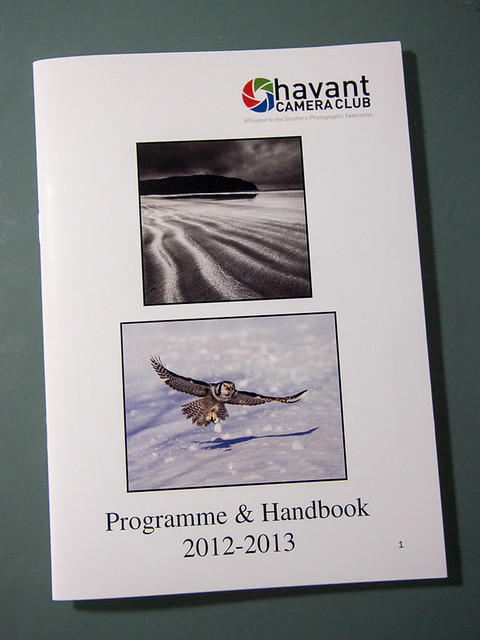
So what happended during the course of the year? Well, at my camera club back in May I was awarded four end of season trophies - Winner of the 'B' league for both Prints and Projected Images, the Most Improved Worker and last but by no means least the Best Projected Image of the Year - Sand Waves. As a result this image appeared on the front of this season's programme. Fame at last! The consequence of this success was to be promoted to the 'A' league for all club competitions and I could now look forward to competing with the 'big boys .... and girls'!

Havant Camera Club Programme
20121223-PC231382.jpg

At about this same time I found myself taking, or to be more exact, converting the vast majority of my images into black and white. Did the success of Sand Waves inspire me to take this course or had it been happening sub consciously to me for some time? In truth I don't know but its now very rare that I take and like a colour photo, as entries on this blog will testify. Am I therefore now a black and white photographer? Well I can't answer that one either, but for the moment I have found a branch of photography which I really enjoy and over the next 12 months I want to learn more about what makes a good monochrome image and how to use post processing to produce the best results. I recognise that I have a lot of work to do.

Sand Waves
Sand waves on the Isle of Eigg

June was the month when I embraced technology and more specifically social media. As a relatively private person I was not sure about this at all but at the beginning of the month I decided to start a blog, this blog. I had never done anything like it before but several months later I am pleased that to have made the effort. For me its been a great way of recording what I have been doing, expressing some of my thoughts on this hobby of mine and I guess a way of showcasing some of my work. In the same month I also started uploading images to my Flickr account. Primarily it became an easy way to add images to the blog but inevitably I started to join in with the Flickr community, sharing comments and hoping that someone might think one of my shots as a 'favourite' of theirs. The statistics for both these online sites are readily available but more of this later. I also created a Twitter account - @ar_frost and started tweeting. Not sure what my family thought, but its a bit of fun if tweeted, sorry I mean treated, correctly! I am currently working on the design and content of my own website which I hope will be ready to go live during the early part of 2013. It will incorporate this blog, so effectively be a one stop shop for my photography and ongoing journal. The domain will be www.alanfrostphotography.co.uk so watch this space!

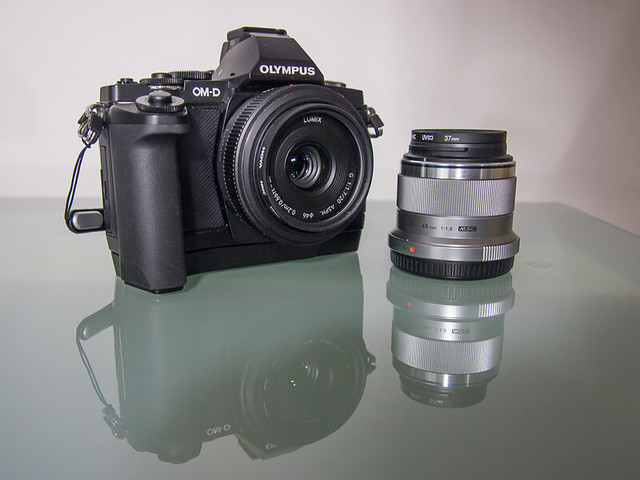
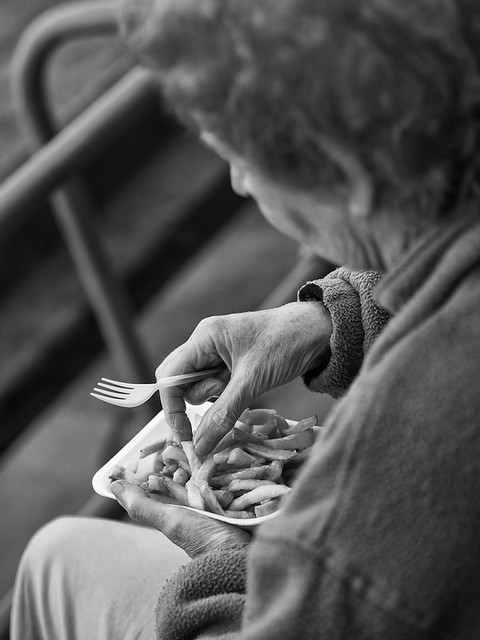
At the end of July I attended a 'People and Places' photography course at West Dean College in West Sussex. It was an excellent week and it definitely cemented my committment to black and white. It also gave me a reason to finally bite the bullit and buy the Olympus OMD EM5 micro four thirds camera. I had already bought the Olympus E-PL3 and one or two prime lenses earler in the year. I was so attracted to this format that the OMD had to be added to the kit bag. Its a great camera. Sadly the Nikon D90 DSLR which was my first serious camera purchased about 3 years ago is not getting much use and I need to decide whether or not it should be exchanged for other micro four thirds lenses. The temptation to go full frame is also there, but I'm not sure the capital outlay can be warranted. We shall see.

Olympus OMD EM5 with one part of the battery grip, Lumix 20mm f1.7 prime lens and Olympus 45mm f1.8 prime lens
20121224-PC241383.jpg


One of my favourite images taken on the course - Fork or Fingers?
Fork or fingers?


In August I had my first and very modest public exhibition of my work at the Bizzare Bazaar, a local  event to raise funds for a new Church Hall in my local village. When I volunteered it was to give visitors something else to look at, never dreaming that I would sell any of my prints. Shock, horror(!) - I sold five prints and I was delighted to donate the proceeds to a good cause - The St Peter Project.

September soon arrived and the camera club season was underway again. At around this time I thought I would enquire about seeking a distinction either through the Royal Photographic Society or the Photographic Alliance of Great Britain. I opted for the RPS Licentiate Distinction and on 2nd December I went up to London for my panel of ten images to be assessed. I passed! I was and still am delighted. My aim is now to work towards the ARPS (Associate) distinction in 2013.

In November our club hosted its National Exhibition and three of my images were selected. Sand Waves (yet again) recieved a Highly Commended from the judges. This and Sea Swirl have also been chosen for the annual Southern Photographic Federation exhibition in Salisbury which starts on the 5th January, but that's 2013 I hear you say. Yes, but the selection was made in 2012 ;o)

Back to statistics. I mentioned in an earlier entry entilted 'Early Thoughts' that it would be all too easy to get addicted to stats, how many views, how many hits etc, but it is a way of measuring traffic and I guess, interest and popularity in my work. As I intend continuing this blog I would like to be able to look back in 12 months times and see how the figures compare. So I have noted down the figures and will look at how they compare in a year from now.

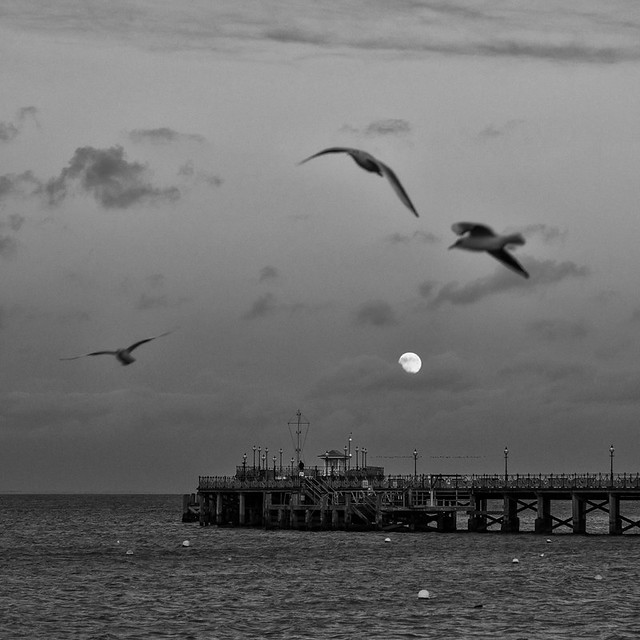
As at today the most popular image on Flickr is 'Full moon over Swanage Pier'. It's also the first photograph to appear on Flickr in 'Explore'.
Full moon over Swanage Pier

Thanks to all of you who have visited this site or looked at any of my images on Flickr, particularly if you have added a constructive comment which is always welcome.

With my very best wishes for a peaceful and healthy New Year.


Friday, 28 December 2012

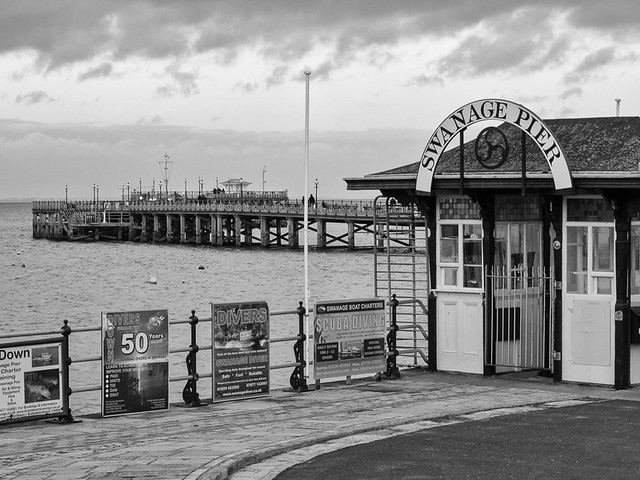
Swanage Pier - a photo opportunity

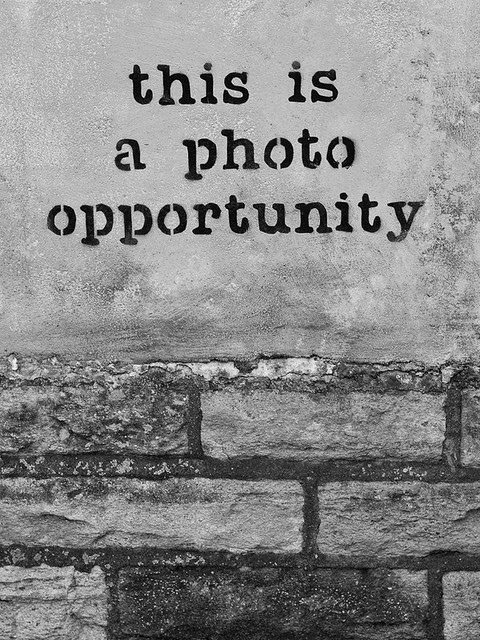
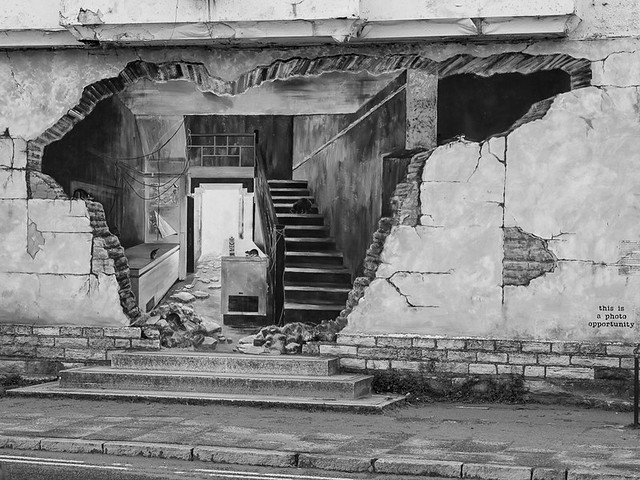
Swanage is a small seaside town on the Purbeck coastline of Dorset. Although I had been to the town before I had not seen the pier, so a quick detour to our journey seemed like a good idea, despite the fact that we would arrive mid afternoon and the light would be fading fast. There wouldn't be a great deal of time for photography but in many ways the short stop was to see whether or not another visit would be worthwhile when I had more time. As we parked the car I noticed a 'Trompe L'oiel' on a derelict building opposite the pier. In the bottom right hand corner was this inscription. An omen perhaps?
All the photos were taken using the Olympus OMD EM5 and Olympus 45mm f1.8 prime lens.

A photo opportunity

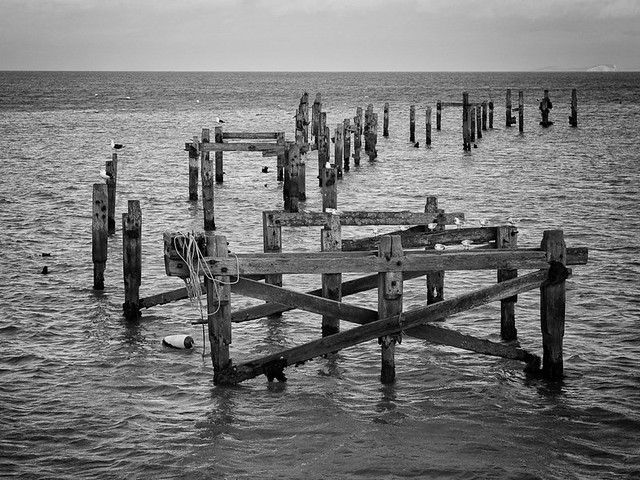
There are in fact two piers at Swanage. The remains of the original pier which was built in 1859 and the 'new' pier, which was built in 1895, the latter having undergone considerable restoration in recent years.
Swanage Pier

The original pier
The Original Pier

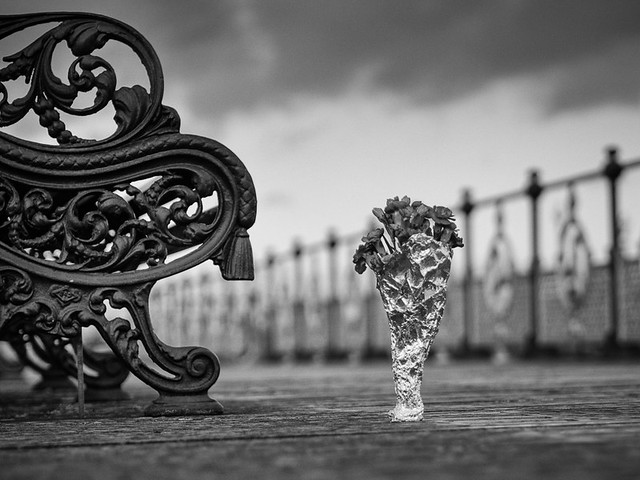
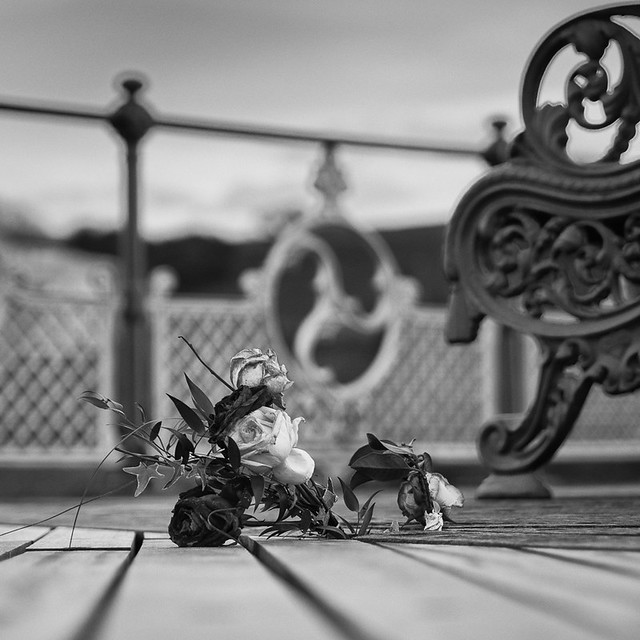
As I walked along the pier I noticed that the vast majority of the wooden planks included a small brass plate with an inscription. In one or two cases a floral tribute had been left, probably on Christmas Day which only adds to the poignancy of the next two images.
Floral tribute on Swanage Pier

Another floral tribute
Floral tribute on Swanage Pier (2)

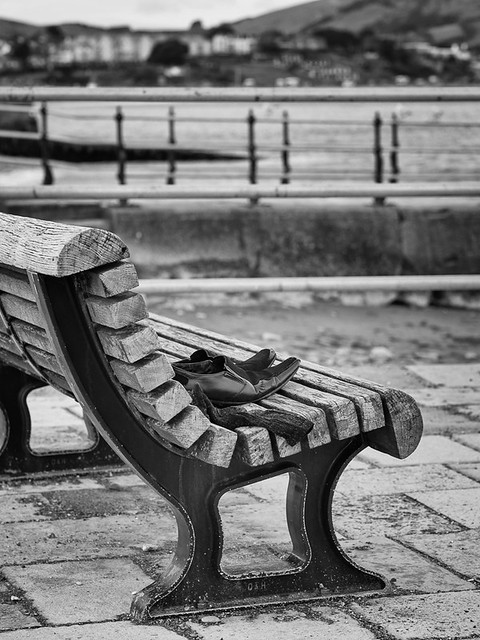
There are many benches along the promenade looking out to the sea. On this particular bench was a pair of shoes and a single sock. I only hope the owner returned from his paddle, together with the missing sock, on what was a particularly cold day.
Shoes and a sock

The magnificent trompe l'oiel I referred to at the beginning of this entry. The 'photo opportunity' inscription can be seen in the bottom right hand corner.
Trompe l'oeil on derelict building in Swanage

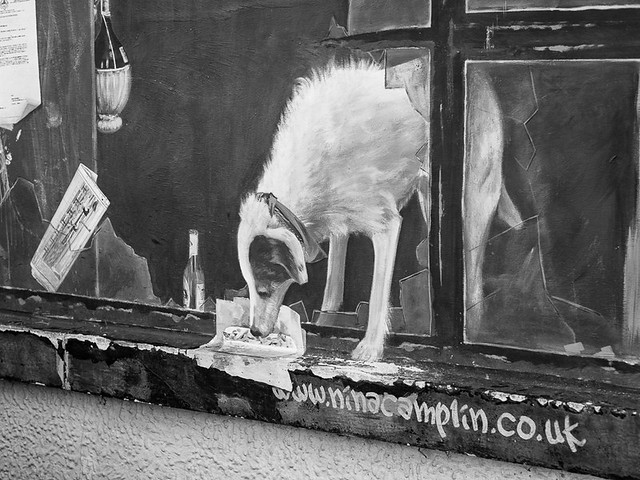
Another trompe l'oiel which has been painted on a shutter board in a window
Trompe l'oell near Swanage Pier

As the light faded the full moon joined the sea gulls in the sky
Full moon over Swanage Pier

Swanage Pier is definitely a 'photo opportunity' and one I hope to return to in the not too distant future.