Showing posts with label south downs. Show all posts

Saturday, 16 November 2013

100 miles along the South Downs Way and the 100th Blog Entry!

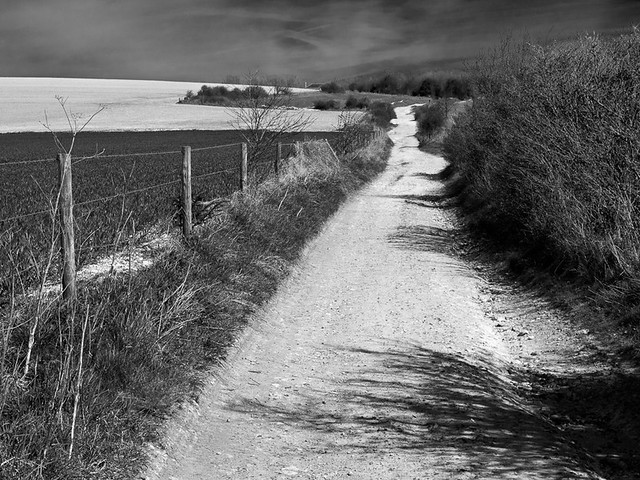
Firle Beacon
Firle Beacon, The South Downs

When I typed the words for my last entry 'Less is more' I realised two things. Firstly that it was time to conclude this series of entires about my walk along the South Downs Way and secondly that whatever the subject of the next entry, it would be the 100th post since I started this blog back in June 2012.

So it is rather fitting that this post should mark the conclusion of a 100 mile long distance walk alongside the fact that this is the 100th entry. When I started the walk I had a definite goal in sight. Quite simply to complete the walk in the planned period of time. The same cannot be said for this blog. What started as a whim, has turned into a regular and most enjoyable hobby. On average I post about five times a month, mainly at weekends, simply because this is when I can find the time to sit down, write the words and select the appropriate photographs having processed them beforehand.

This blog has proved to be a journal of my photography. The places or events I have been to and the images I have taken. Sometimes I will express my thoughts or write about the cameras, lenses and equipment I have used. But one thing is for sure - nothing is planned too far in advance. All the posts are a spontaneous reaction to an event, a particular photograph or series of images, or thoughts that have entered my mind which I have wanted to record and share with others - Sharing does of course assume that there are other readers, not just my wife and close family!

So back to the main reason for this 100th post. A photographic conclusion to a great experience. I shall never forget walking with my nephew Ian down the steep slope from Beachy Head and into Eastbourne, to be greeted by my family and his father. This varied selection of images were all taken on the walk and will always remind me of wonderful time enjoying the beauty of the South Downs.

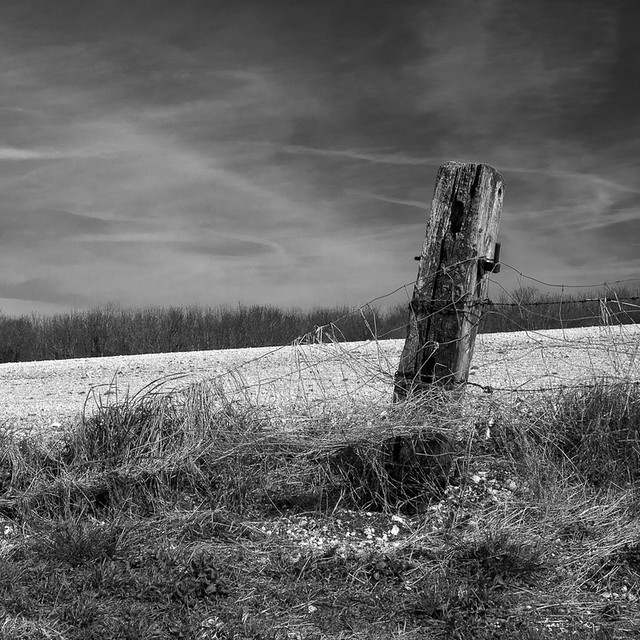
Gates and posts
Gates and Posts


Gathering Storm (2).jpg
Gathering Storm. Near Birling Gap


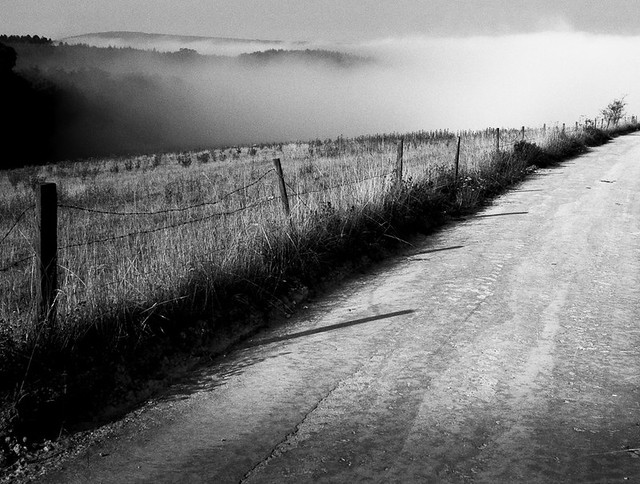
Downland mist
Downland Mist. Near Cocking


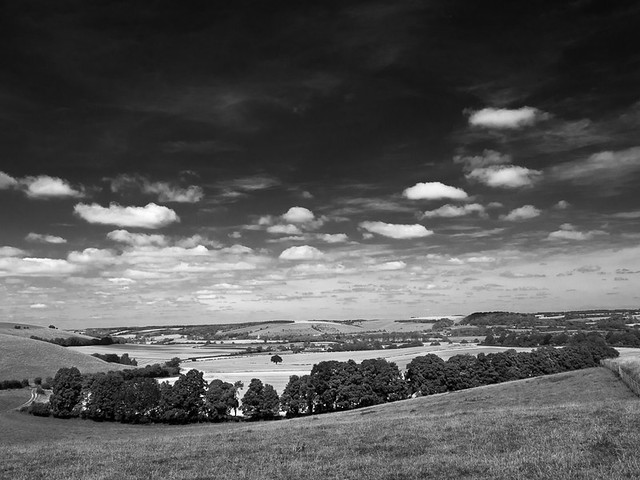
Towards East Meon
Towards east Meon


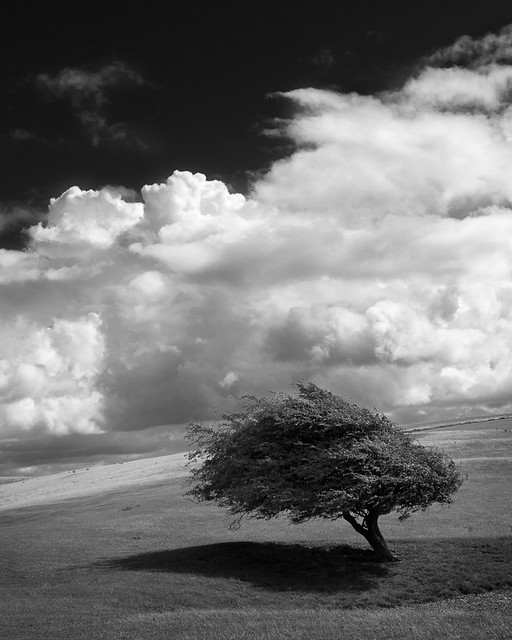
Windswept tree
Windswept Tree. Near Ditchling Beacon


The Seven Sisters
The Seven Sisters. Looking west from above Birling Gap


20130909-_9090110.jpg
The finishing post after 100 miles.
Ian on the right and me on the left.

The other entries about our walk along the South Downs Way are as follows:-


And so to the future - Another long distance walk perhaps? That I don't know, but I will be starting work on my 101st entry very soon.

Saturday, 9 November 2013

Less is more when capturing the South Downs

Downland fence
Downland fence

It is hard to believe that two months have passed since I completed my walk along the South Downs Way and here I am still writing about the experience and the photographic lessons I learnt.

I guess that if you mention the South Downs to a bystander they will conjure up in their minds a wide expansive view of the Sussex Weald and Downland. Large vistas which are truly beautiful but incredibly difficult to capture in a photograph. It is perhaps one of the reasons so called 'holiday snaps' never quite do justice to the scene we witnessed. We are tempted to try and include everything we see in one photo and whilst it may be a good record of what we saw, it often fails as a photograph. It might lack a good composition, any form of focal point to draw the eye, be poorly lit or quite simply not truly capture the feelings that the photographer felt at the time.

I can't deny that some of the images I took fell into the 'large vista' category but I was also mindful to look closer and try and simplify the landscape through careful composition, concentrating on just two or three key elements and in so doing try and capture the essence of the South Downs and not just the grand view.

So this entry includes a selection of images all taken from the South Downs Way, where less is hopefully more.


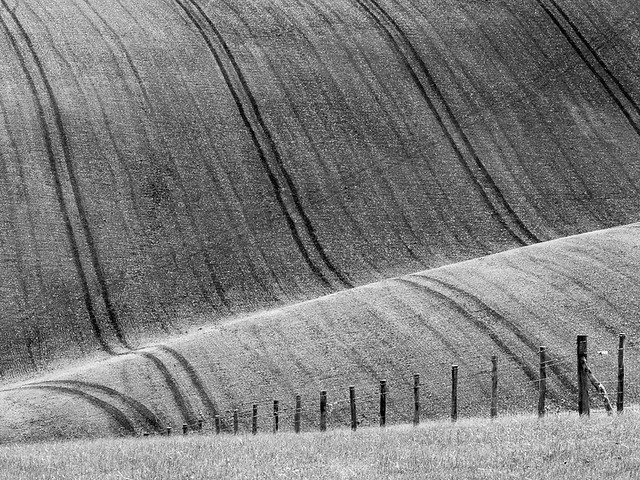
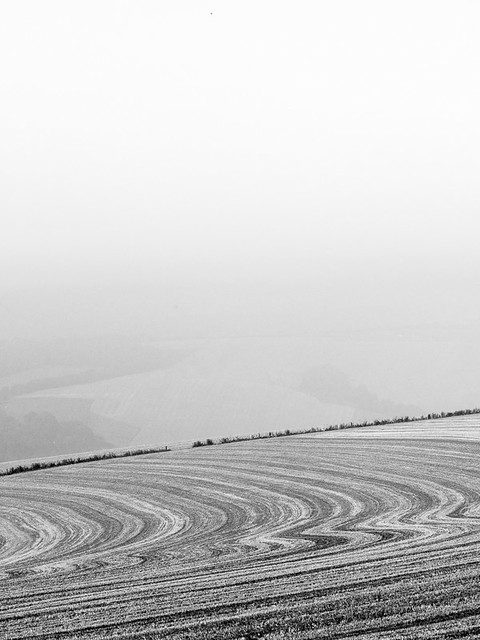
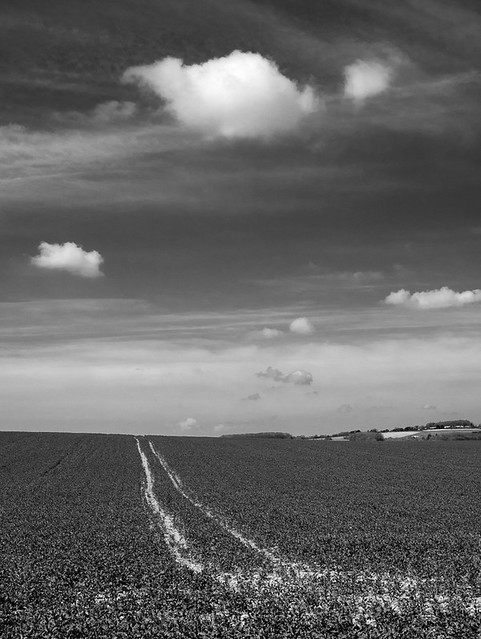
Field of curves
Field of curves


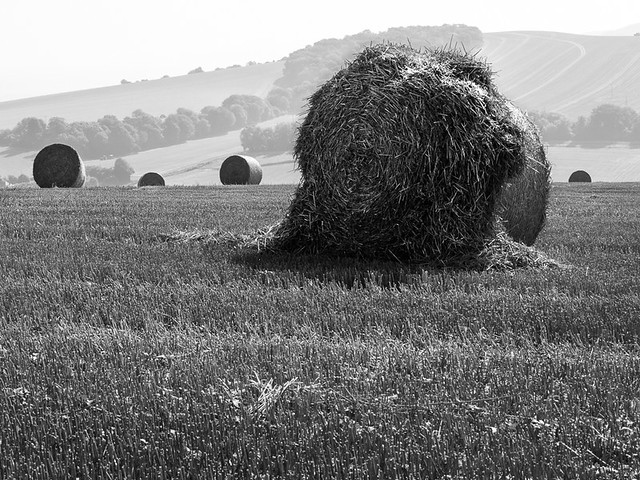
The straw bale
Straw bale


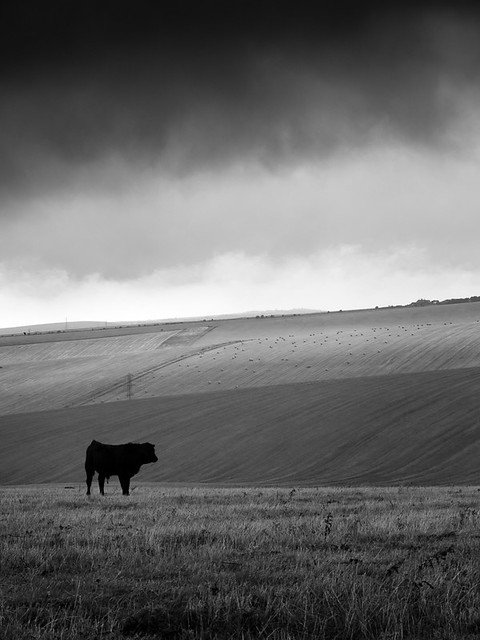
Lone cow
Lone cow


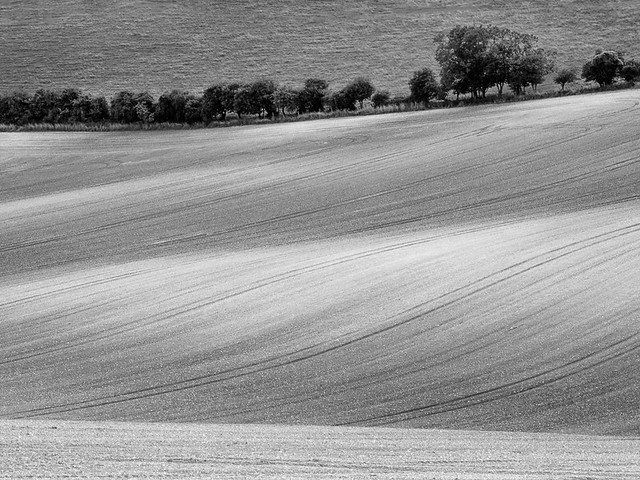
Downland field
Downland field


No shelter
No shelter


Dead tree
Dead tree


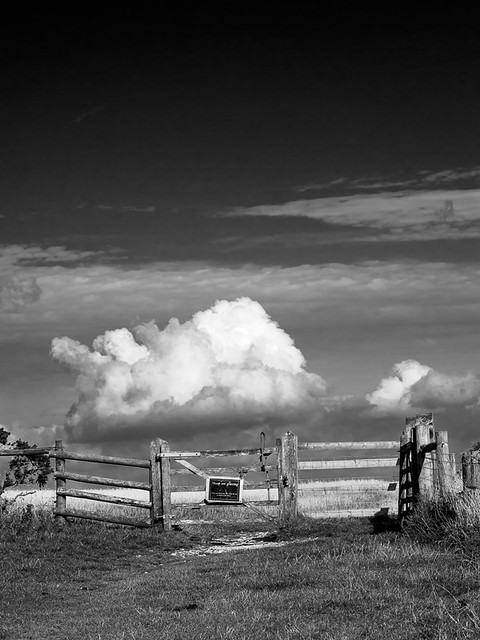
Gateway to the sky
Gateway to the sky


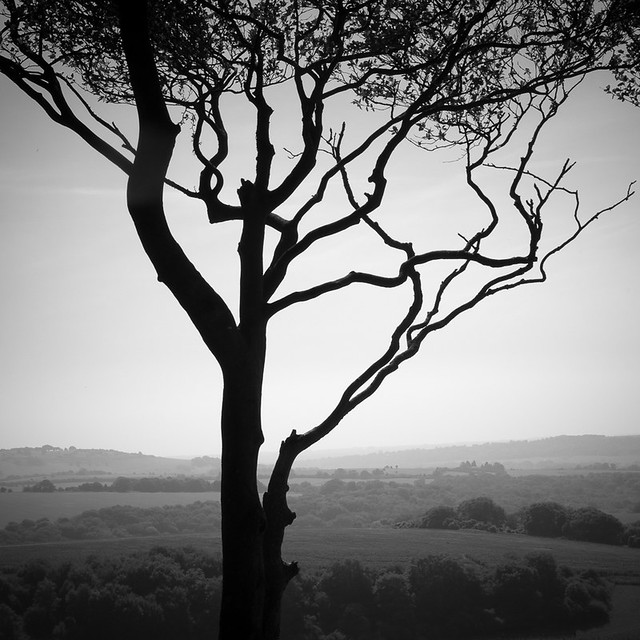
Twisted tree
Twisted Chanctonbury tree


Do these photographs capture something about the South Downs? 
Do they capture the feelings I experienced when I first saw and composed the image in the viewfinder? Do they do justice to the beauty of the area and its countryside? 

So many questions and of course I have my own answers and anyone viewing these images will have their own opinions. In the end they are the view I chose to take, my interpretation and my treatment. They give me pleasure and I hope others might just feel the same way.

Thank you for reading my 'blog' and do leave a comment if you have anything you would like to say.


Sunday, 27 October 2013

Windmills on the Way

Jill Windmill
Windmill 'Jill' at Clayton

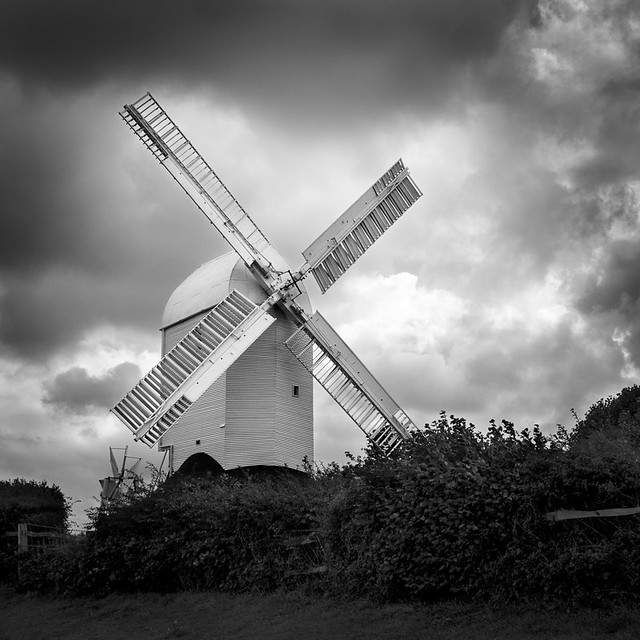
The South Downs is an Area of Outstanding Natural Beauty, but in addition to the glorious rolling downland landscape it is enhanced by man made structures, in particular the windmills which shine like beacons when the sun lights up their sails and the 'smock' or mill itself.

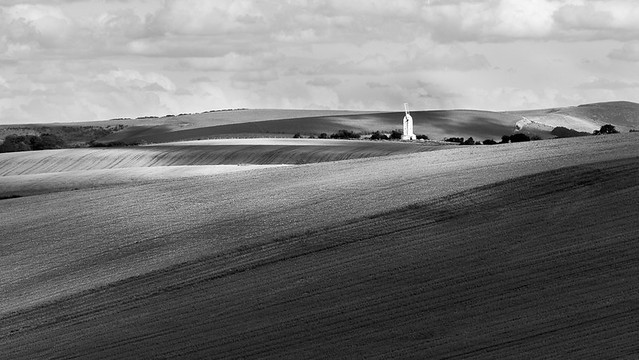
Walking the South Downs Way provides a great opportunity to see these charming buildings from near and far. At the top of this page is an image of one of a pair of windmills at Clayton to the north of Brighton. This one is fondly called 'Jill' and there are no prizes for guessing the other one is called 'Jack'. Of the two 'Jill' is the one that stands out and is very visible from a distance. Its white smock and four sails is in stark contrast to 'Jack', which is painted black and has no sails. The next two images were taken from West Hill to the east of Pyecombe.


Windmill Jill
'Jill' in the distance


Distant windmill
Afternoon light on 'Jill' 

The other windmill which regularly appears in the landscape is Ashcombe Mill at Kingston, near Lewes in East Sussex. Like 'Jill' it has a white smock and currently only has two sails. Originally built in 1828 it was destroyed by a gale in 1916. Since 2009 work started to rebuild this windmill and when completed will have six sails. The two images below show Ashcombe Mill in its downland setting.


Towards Ashcombe Mill
Ashcombe Mill in the far distance, surrounded by the downland landscape

Ashcombe Mill
Ashcombe Mill at Kingston near Lewes


One day I will return and visit Ashcombe Mill itself, when the restoration is complete and the windmill has been returned to its former glory.

Saturday, 19 October 2013

Last leg first - Walking the South Downs Way

Whist this blog is about my photography, there has to be an inextricable link between taking pictures with the things I do, the places I go and the people I meet. I don't 'set up' my photographs or continually 'pixel peep' by testing cameras, lenses or other equipment. I may from time to time comment on my gear, but for me this blog is more about my experiences and trying to capture those moments with a camera. Nor may I finish processing the images in the strict order they were taken. I will be drawn to a shot, work on it and then return to it later on, and in the interim start processing another image which could have be taken earlier or later.

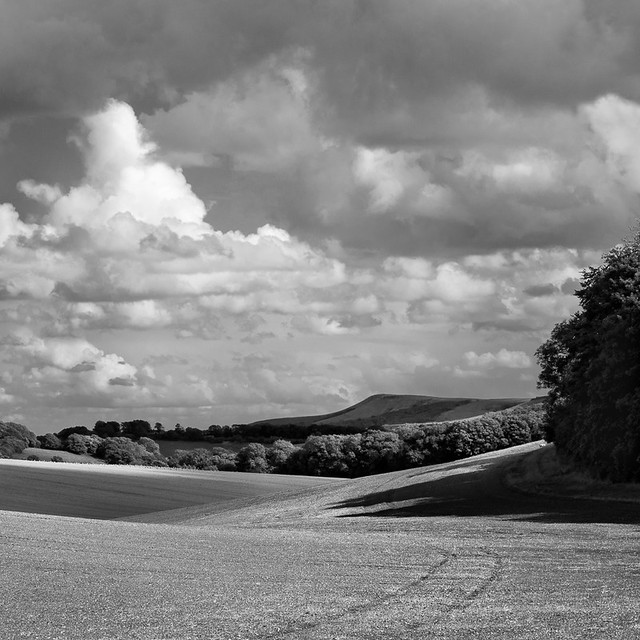
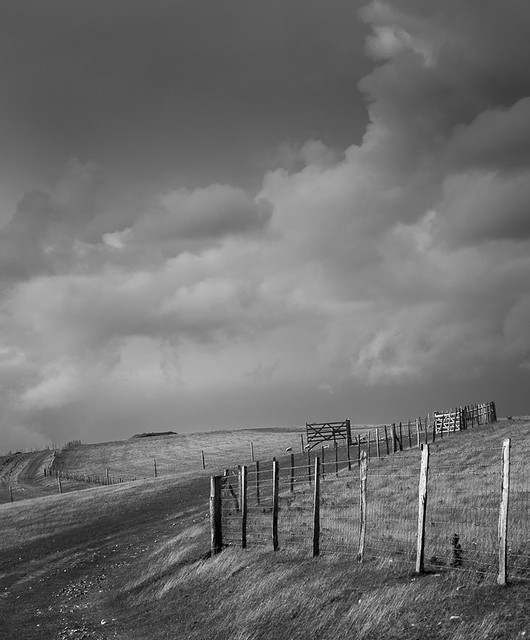
So you might be asking yourself what is the meaning of the title to this particular entry? Well quite simply in September I walked 100 miles along the South Downs Way from Winchester to Eastbourne and as you might imagine I took many photographs. Although I have now finished processing quite a few of these, there are still others to do. Unfortunately there are only so many hours in the day. However I think I have completed work on the images I took on the last section of the trail as we  walked from Cuckmere Haven, up and down the Seven Sisters, over Beachy Head,  before the final descent into the East Sussex town of Eastbourne. So this entry covers the last leg of our walk and other posts in the future will I am sure cover other sections of the trail which took place in the preceding days.
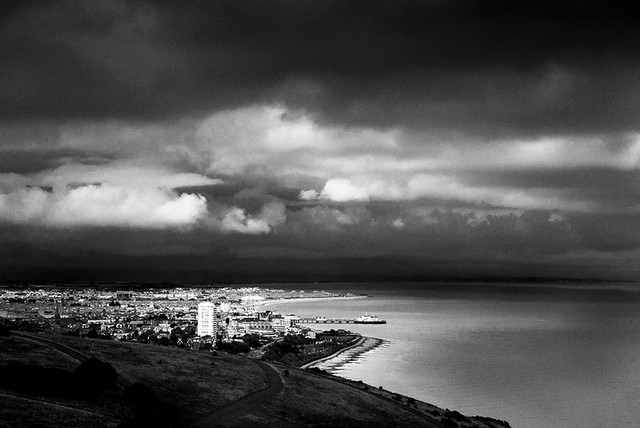

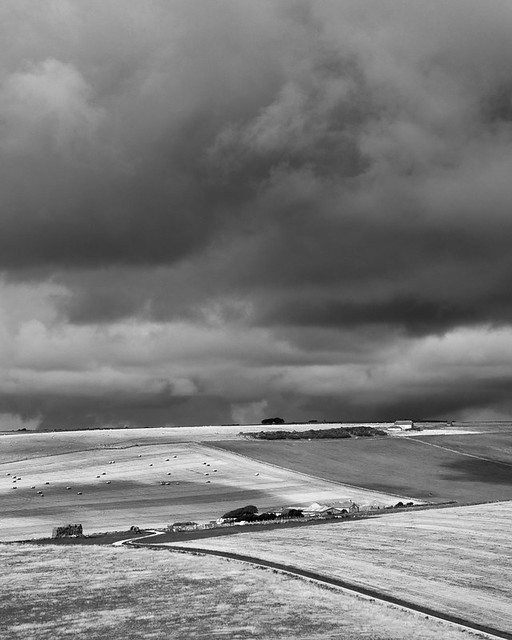
Eastbourne
Sunlight on Eastbourne as rain clouds circle all around.

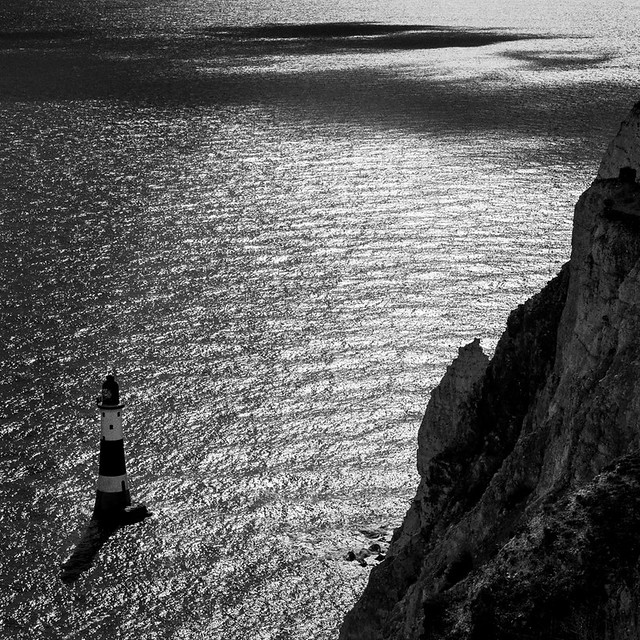
Beachy Head
Beachy Head lighthouse


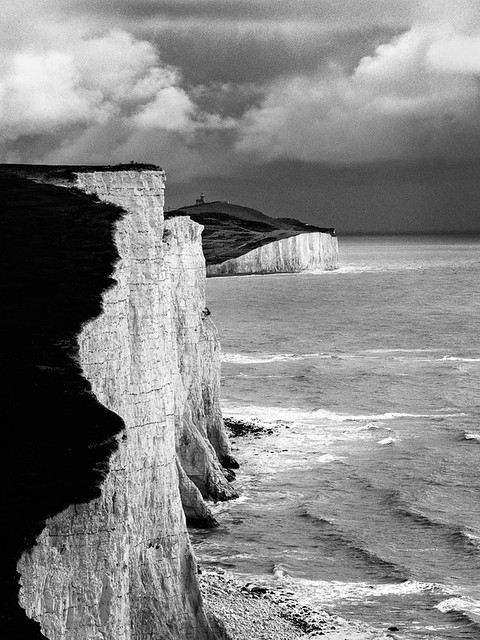
Seven Sisters
Seven Sisters with Belle Tout lighthouse on the cliff in the far distance


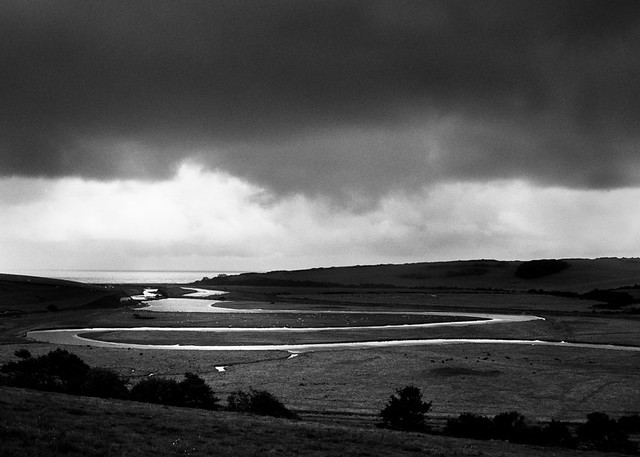
Cuckmere Haven
Rain approaching the estuary at Cuckmere Haven


All the images in this post were processed in Lightroom 4, converted to black and white in Photoshop CS5 and the grain was added in Silver Efex Pro2 using the Kodak Tri X400 film preset.

Whilst writing this entry I remembered a great line in a Morecambe and Wise sketch from many years ago with the conductor Andre Previn, in which Eric Morecambe was trying to play a piece of Grieg's Piano Concerto.

Andre Previn said to Eric -
"You are playing all the wrong notes"
to which Eric famously replied -
"I'm playing all the right notes, not necessarily in the right order!"

So until the next leg of the walk, I hope you enjoyed the last one and if you have never seen this wonderfully funny sketch before, then here it is. The section of the sketch referred to above starts at around 10 minutes.

Saturday, 21 September 2013

The Cloud - Pre-visualising a minimalist image

The one disadvantage of combining walking the South Downs Way and taking photographs was quite simply the need to press on; complete the required number of miles for that day, so that we could reach our pre-booked overnight stop. So any photographs were taken as the opportunity arose. No stopping and waiting for the light to change. More observation, a quick composition, release the shutter maybe two or three times and then on we would go. I have to say I quite enjoy this more spontaneous type of image making.

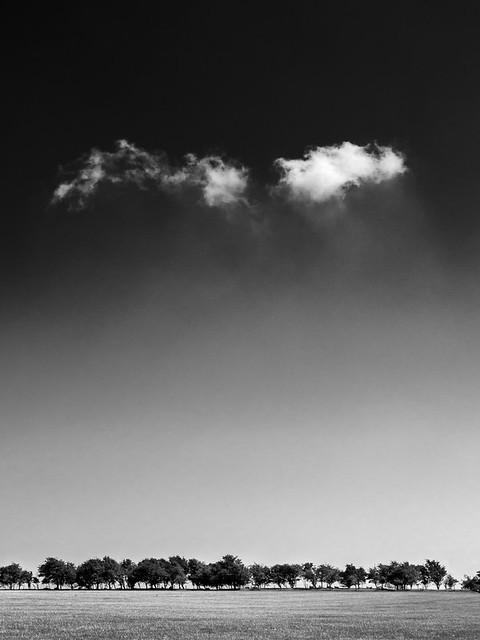
The shot which is featured in this entry is almost certainly an image which in the past I would never have seen, let alone taken. But as I learn the so called art of 'pre-visualisation' I noticed what I thought were an attractive line of trees on the horizon. It was the middle of the day, the sun shone brightly, it was particularly hot for the time of year and hardly a cloud in the very blue sky. But then I noticed some wispy clouds moving in the light wind above the tree line. Immediately I had an idea as to how the finished image might look.

I grabbed my camera, composed the shot and took a few frames. Of the three, only one was workable, as the cloud in the other two had dispersed and no longer gave me the effect I had foreseen at the time of taking the photograph. In fact I remember that it only took a few minutes before the cloud in this scene had been been burnt away by the warmth of the sun.


The Cloud
The Cloud


It's a very minimalist composition. A line of trees, a dark sky and a few wispy clouds. The finished result is largely how I imagined it might look when I released the shutter. Again another lesson learned. 

I don't know who first said it, but there is a quote which reads as follows - 'The more I practice, the luckier I seem to get'. I am sure this could be applied to many situations, but to me it is a very true saying and one which can certainly be applied to my growing interest in photography.

Friday, 20 September 2013

The Gate - processing a digital painting?

Although I have not had much time since I returned from walking the South Downs Way, I have at least made a start on editing and processing some of the catalogue.

Whenever I take a large number of shots, from the moment I press the shutter there are some which stick in my mind. Perhaps instinctively I know that these shots might have the right basic ingredients to make a potentially pleasing image.

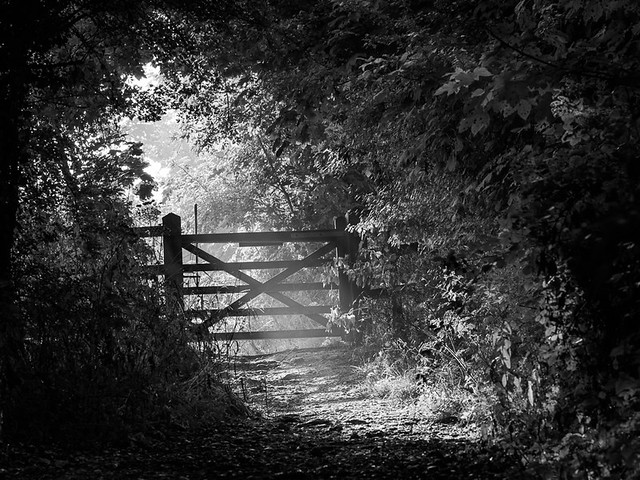
One such shot was taken early in the morning as we left the village of Amberley and started the uphill climb to Amberley Mount. The sun had not long risen and there was still some early morning mist in the air. We came across a gate in amongst some trees and hedgerow. The light being cast on the scene was just glorious. I only took the one exposure and here is the result.


The Gate
The Gate -
on the South Downs Way

I originally started processing the image in Photoshop CS5 a few days ago and made a number of fine adjustments on a daily basis until I felt completely happy with the result. More often than not I will process a photo in one sitting, but on this occasion I took more time and tried to remain patient. This was simply because each time I revisited the image, either later in the day or the following morning, I would look at the picture and see something new, which I thought could be fine tuned to enhance the overall appearance.

This staged approach is of course no different to an artist with a paintbrush in his hand. A painting will often take a number of sessions to finish and as the paint dries so the picture changes. I don't think the method of processing a photograph should be any different. I accept that some images can be completed in no time at all, but there are others, and this is a good example, when more time and patience brings its reward. You do of course have to decide when to click 'save' for the last time and that decision is never an easy one. For now the 'The Gate' is finished and I can now enjoy 'fine tuning' the next image in this series on the South Downs Way.

There is not a great deal more to say, other than how fortunate I was to be in the right place at the right time to capture this shot. The shaft of light coming from the other side of the gate was a very beautiful sight, as it lit up the path and the foliage of the surrounding trees and hedgerow.

Sunday, 15 September 2013

Walk completed - let the processing begin

On Monday my nephew and I successfully completed our challenge to walk the length of the South Downs Way - 100 miles from Winchester to Eastbourne. We had a wonderful time. We encountered wind and rain, beautiful sunshine and for two of the nine days, temperatures which must have been close to 30C. A bit too hot for walking but we had to keep going, and keep going we did.

In the process we managed to raise nearly £5,000 including Gift Aid for our chosen cause. The St Peter Project - a new church hall for Fishbourne.

The scenery along the trail was very special and there were plenty of opportunities to press the shutter on my Olympus OM EM5. I only took two lenses; the Panasonic f2.8 12 to 35mm zoom lens, together with it's sister the f2.8 35 to 100mm. I wanted to travel light, so this combination would cover most situations.

Many of the photographs taken were more record shots than images which might stand out from the crowd. So now the fun begins to go through several hundred RAW files and begin the editing process. It will take a little time and I do want there to be some order to their inclusion on this blog, whether by type or in chronological order, I have yet to decide.

By way of a taster here is one shot which perhaps typifies the scenery and the beautiful weather we enjoyed for much of the time.


Distant windmill
Distant Windmill

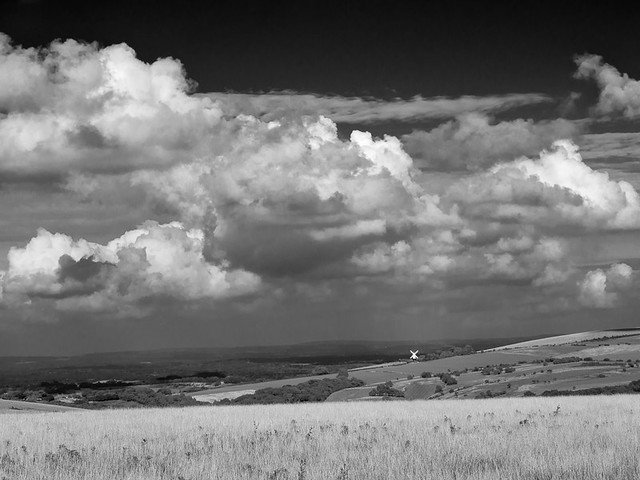
The above image was taken from West Hill to the north of Brighton before we descended into the village of Pyecombe. The windmill you can see is called 'Jill', and is one of a pair, the other being called 'Jack'; they are a well known landmark on the South Downs.  The clouds were just stunning and the afternoon sun fell on 'Jill' and lit up its sails, so it shone like a beacon against the distant hills in the background.

I am so looking forward to processing more images and when I have, I hope they will provide a useful source of material for a number of forthcoming entries on this blog.


Friday, 30 August 2013

A 100 mile walk along the South Downs Way

For the past few months I been exploring the South Downs countryside near our home for two principal reasons. Firstly for my photography and secondly because in a few days time I will be starting on a challenge to walk the South Downs Way from Winchester to Eastbourne; a total of 100 miles.


20130706-_7060194.jpg
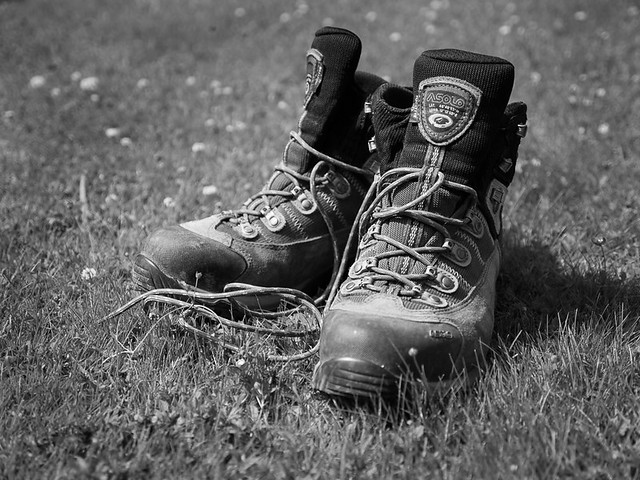
Boots made for walking


The walk is in memory of my sister who died from cancer at Easter at the age of 59 and I am raising funds for a community project to build a new church hall near to where we live - The St Peter Project. My companion and fellow walker will be my sister's son Ian.


20130709-_7090201-Edit.jpg
Ian and I

Donations have already exceeded all expectations and today have reached the landmark total of just over £4,000 including Gift Aid. I am truly grateful to everyone who has generously sponsored me and offered so much support.  For more information please see my Virgin Giving Money page.

Although I am a keen walker I have never done anything like this before, so hopefully I will complete the challenge without too many blisters! It will be a wonderful opportunity for me to spend more time with Ian, and to visit and photograph parts of Sussex I have not been to previously. It should provide me with plenty of material for this blog and my website alanfrostphotography.co.uk.

Inevitably though this blog will go a little quiet for the next two or three weeks but it's all for a good cause, and I am already looking forward to sharing with you many more images from this particular adventure.


Sunday, 18 August 2013

Harvest time

The time to harvest the crops is upon us. It's the season when farmers have to make the sometimes difficult decision as is to when is the optimum time to roll out the combine harvester, maximise the yield and not to risk a change in the weather, as this has the potential to do untold damage to the crop, not to mention their bank balances.

The South Downs are covered in fields of wheat and on a recent walk the threatening shower clouds started to form, although the rain never fell one me fotunately.

This post of just four entries captures for me something of the beautiful downland scenery at this time of year.

Harvest shower
Harvest shower

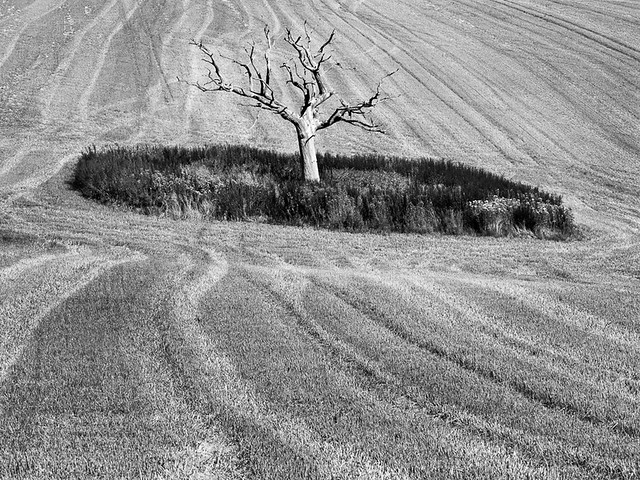
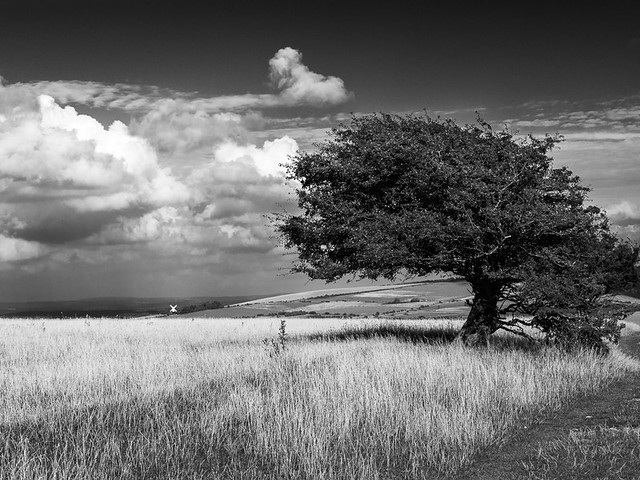
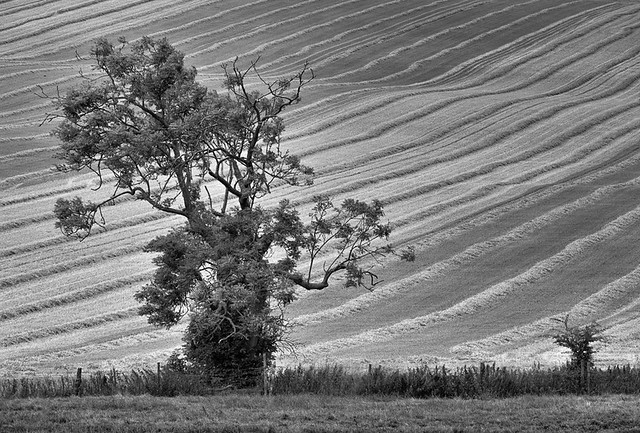
I was drawn to the scene below of the old tree and the flowing lines of the field which had recently been harvested. A week later I returned to the same spot and these distinct lines were no longer so clearly defined. The 'decisive moment' of landscape photography.

The harvest tree
The harvest tree

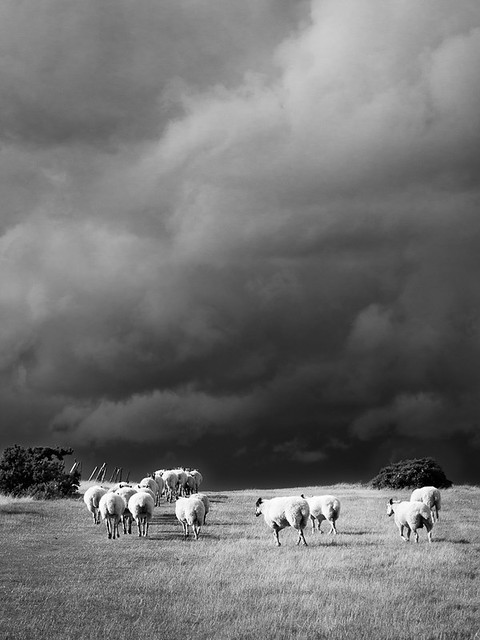
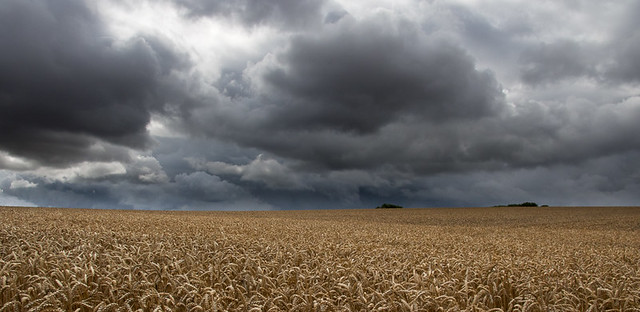
In the next image, which I have called 'Harvest Enemy', I have tried to capture the mood of a brewing storm which threatens the crop of wheat in the field below.

Harvest enemy in mono
Harvest enemy

I rarely process my work in colour but on this occasion I particularly liked the the contrast in colour between the field of wheat and the threatening sky. I also used a 'letterbox' crop instead of a '5x4' crop which was applied to the mono version of the same RAW file.

Harvest enemy
Harvest enemy in colour


I love this time of year as the summer draws to a close and the more changeable weather of autumn starts to appear. Will I be drawn to more colour work to capture the wonderful autumnal colours?, This I don't know, only time will tell. Whatever happens, I will be out with my camera doing what I enjoy most!

Tuesday, 30 July 2013

On the Way

In April 2011 The South Downs became a National Park. Designated an Area of Outstanding Natural Beauty along the south coast of England, the Park is spread over three counties, Hampshire, West Sussex and East Sussex. It covers a total area of 1600km2 and more than 110,000 people live within its boundaries.

The Park is also home to a National Trail or long distance footpath known as the South Downs Way, which is 160km or 100 miles in length. It starts in the city of Winchester in the west and finishes at the western end of the promenade in Eastbourne.

I am fortunate to live just outside the National Park boundary but it only takes a few minutes in the car and I can be in the heart of of this beautiful part of the world.

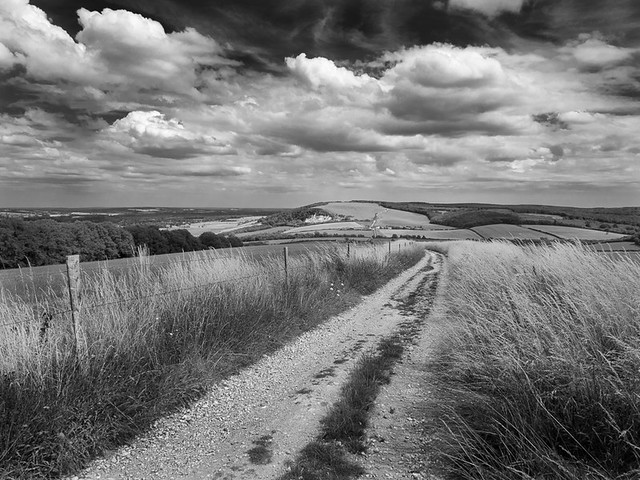
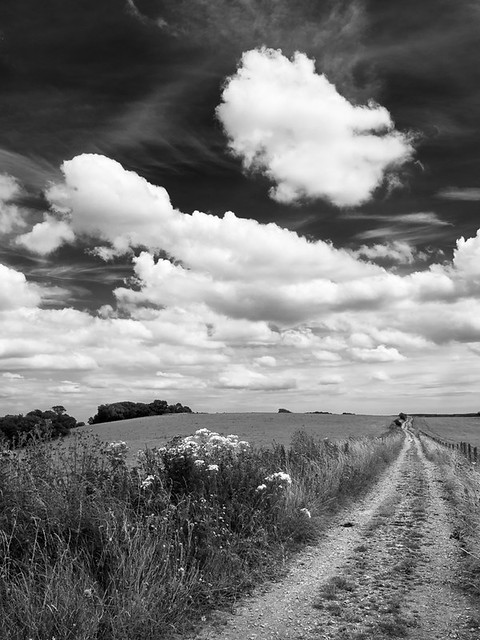
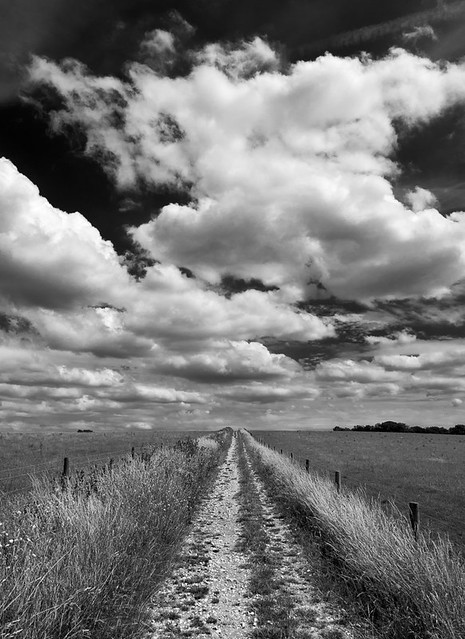
Whilst I love to travel further afield with my camera and explore areas such as Scotland or The Lake District, there is plenty to see and photograph right on my doorstep. So a few days ago I decided to walk a section of the South Downs Way. Starting in the car park to the south of Cocking Village I headed west to the tiny hamlet of Hooksway and then returned to Cocking. The walk was just under 11 miles and the scenery along the route was typical of the chalk downland which forms the escarpment of the South Downs.

Here are some images from the walk.


Towards Cocking
Heading towards the Village of Cocking


On the Way '2'
On the Way


On the Way
Still heading up hill on the Way


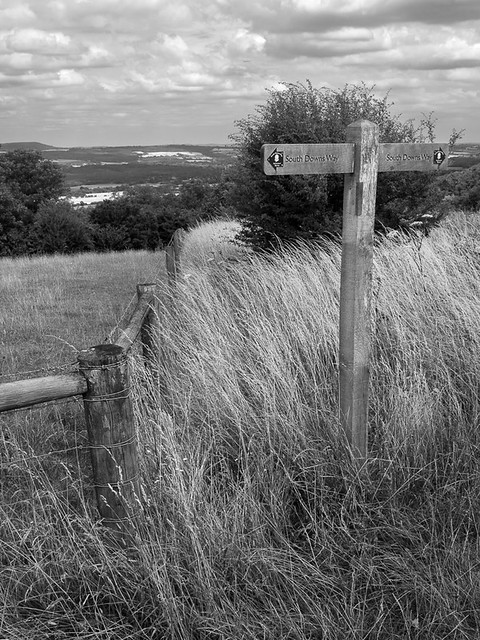
Way post.jpg
A sign post on the Way


All the photographs were taken using the Olympus OMD EM5 and Panasonic 12-35mm f2.8 lens. The wonderful clouds made these images what they are. I did not use a polariser but achieved the lovely contrast in the skies in post processing.  

Wednesday, 8 May 2013

The Hooksway Round

The weather so far this year has been quite poor and as a consequence Spring has been delayed. It's also quite often the case that when a Bank Holiday appears on the calendar, the forecast is for wet and windy weather, just when most people are looking forward to a long weekend or extended break. Fortunately this was not the case at the beginning of May. The skies cleared, the sun shone and the temperature rose. An ideal time to explore the beautiful countryside near where we live.

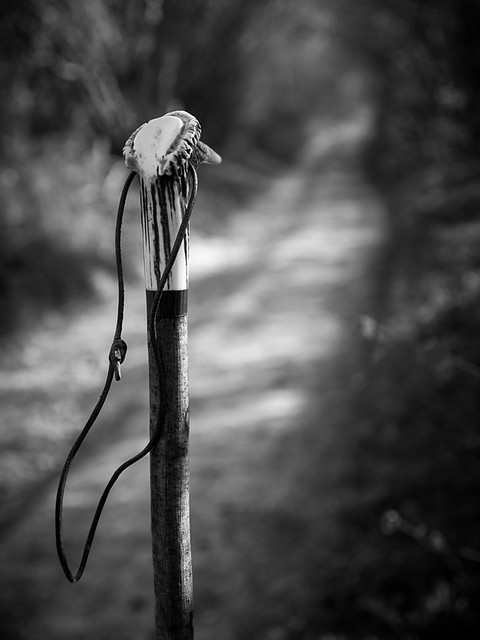
So I headed out with my camera and trusty walking stick which is made from twisted hazel with an antler handle, sourced from Islay in Scotland.


Walking stick
My trusty stick and the path ahead

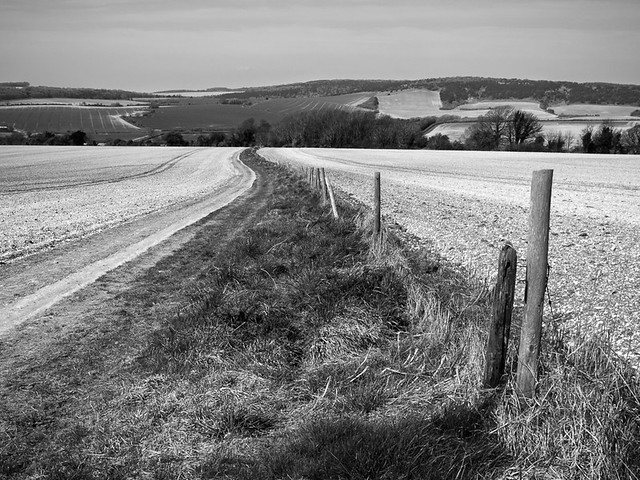
I decided to follow a walk I had done many times in the past but for one reason or another had not undertaken recently. The walk starts in Hooksway just north of Chilgrove and after about a 3/4 mile joins the South Downs Way. As I walked along the Way I could clearly see Buriton Farm to the left with Pen Hill in the distance.


Buriton Farm and Pen Hill.jpg
Buriton Farm with Pen Hill on the horizon


Towards Pen Hill
The approach to Pen Hill

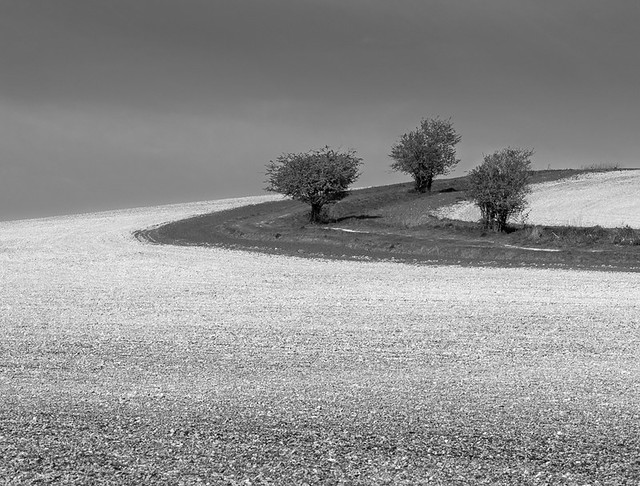
The Way leads to the top of Pen Hill and I was instantly drawn to the three trees which are on the path, with chalk and flint fields on either side.

Pen Hill trees
Pen Hill and three trees

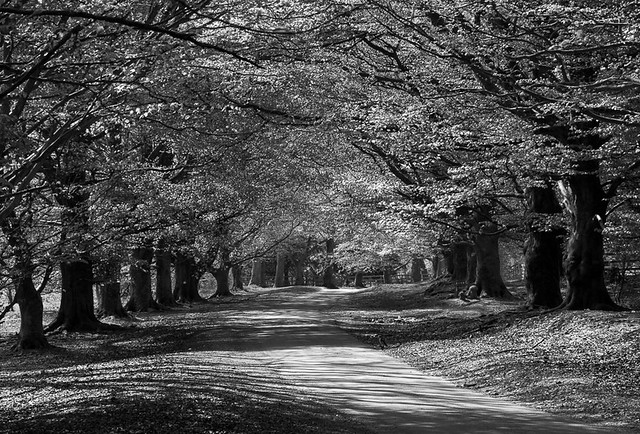
After about two miles into the walk, I left the Way and took the bridleway through a delightful avenue lined with beech trees before returning to Hooksway.

Avenue of Beech Trees
Beech lined avenue near Telegraph House

Four and a quarter miles in total and a really lovely way to combine two of my pleasures in life - walking in glorious countryside with a stick in one hand and a camera in the other..... for my photography of course!


Monday, 22 April 2013

A walk from East Lavant to The Trundle

It was such a beautiful morning on Sunday that I decided to take a circular walk from the West Sussex village of East Lavant to the Trundle at Goodwood and then return to the village via Chalk Pit Lane. Whilst I did not go out specifically for photography, I fully expected to stop and take one or two images in the lovely downland countryside to the north of Chichester.

I wanted to 'travel light' so I simply took the Olympus EM5 and two Panasonic zoom lenses - the 12-35mm and the 35-100mm, both of which have a constant f2.8 aperture. Packed away in my Billingham Hadley bag with a bottle of water and an OS Map (just in case), I had everything I would need to enjoy the walk.

The only other essential was my iPhone; not so that I could make or receive calls or emails but to use an App called Walkmeter. This great exercise App would plot my route on a map, tell me how far I had walked, my pace and also ascent and decent distances. Yes, I admit to liking gadgets but this particular App is going to be an important tool in the weeks and months ahead, as I have decided to walk the length of the South Downs Way later in the year. The Way is approximately 100 miles long, and walking West to East, it starts in Winchester and finishes in Eastbourne. Whilst I enjoy walking I don't consider myself to be that fit, so expect some more blog entries in the future about walking in the South Downs National Park coupled with photographs of my travels. It should be fun!


Hayes Down looking West
Looking west from Hayes Down


Hayes Down post
An old post alongside the footpath which runs across Hayes Down
between the River Lavant to The Trundle


Chalk Pit Lane
A chalk path leading to The Trundle from East Lavant - aptly named Chalk Pit Lane


Hayes Down from Chalk Pit Lane
A view over fields from Chalk Pit Lane 


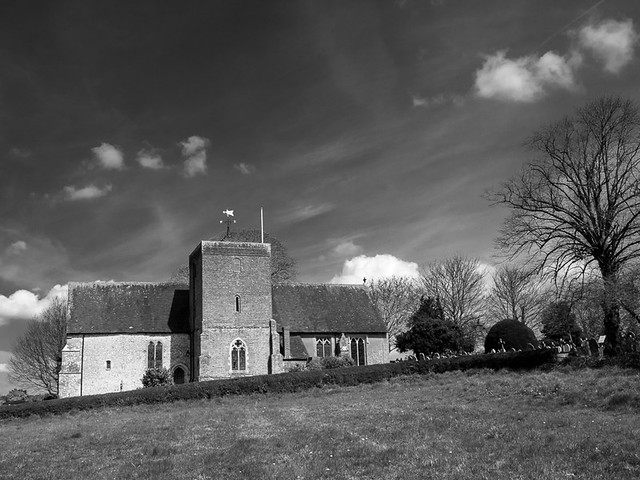
Church of St Mary East Lavant
The Church of St Mary in East Lavant, close to the start of the walk.

For the record this circular walk is 4.75 miles long and in actual walking time it took about one hour and thirty five minutes. In reality it took quite a bit longer as I did stop from time to time to take some photographs!
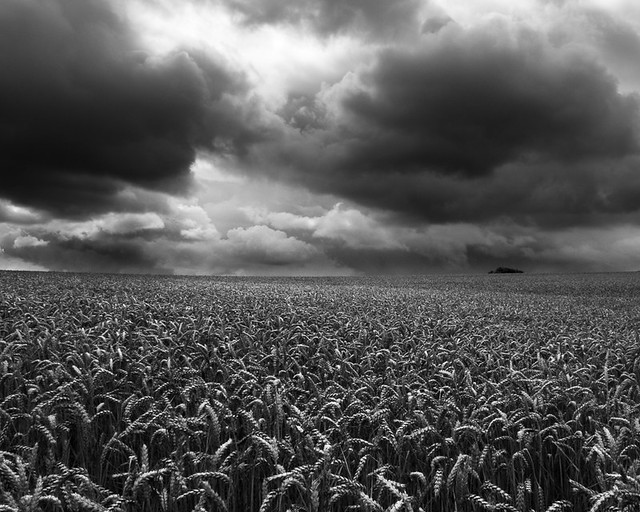


Friday, 1 February 2013

Churches in the landscape - South Stoke

In my last post (Idsworth Church) I touched on the topic of choosing a suitable subject which would inspire me for my panel of images for the 'ARPS Distinction with the Royal Photographic Society. The choice is proving to be quite a challenge in its own right and this is before I start taking any photographs worthy of a submission. Fortunately I am not up against the clock and I will take my time. It's a bit like a driving test and I would like to pass first time, so it will pay me to prepare properly and take as much time as I need before I apply for an assessment date. Between now and then there is likely to be long gap. The selection of a subject or theme is only the starting point. I will need to undertake a lot of research into my chosen topic, particularly if this involves travelling from one location to another, either at home or abroad. I am sure it will involve being outdoors and therefore I am also in the hands of weather and the changing seasons, which could very well determine the success or otherwise of each photographic session. In total the panel is made up of 15 images, which is quite a number when you consider they all need to be of the same high standard; work as a cohesive panel and all conform to the original brief. I will also seek the guidance and critical encouragement (hopefully!) from a suitable mentor or mentors.
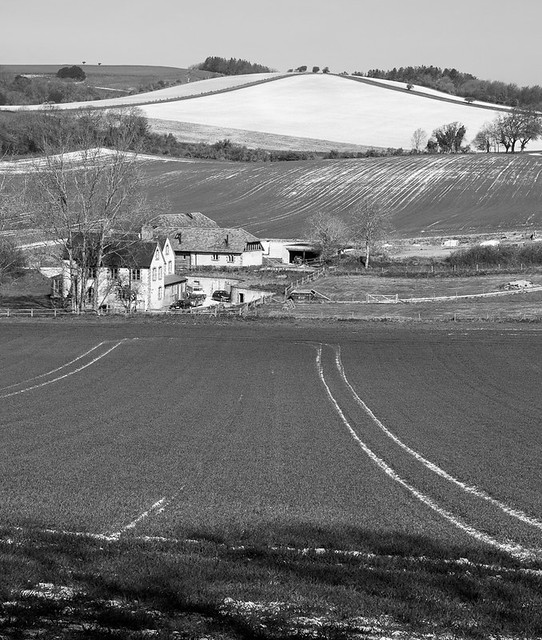
Given that I have not yet jumped the first hurdle (the one called subject matter) for the moment its a question of exploring different ideas and seeing what may or may not work. I think I will know when I find a theme which inspires me; for without the passion and enthusiasm for the subject, how can I expect to produce a strong set images? In truth I can't, so until that day comes the thinking and the search goes on.
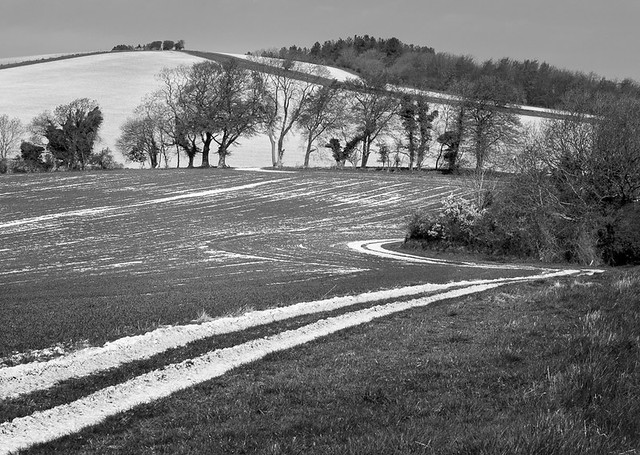
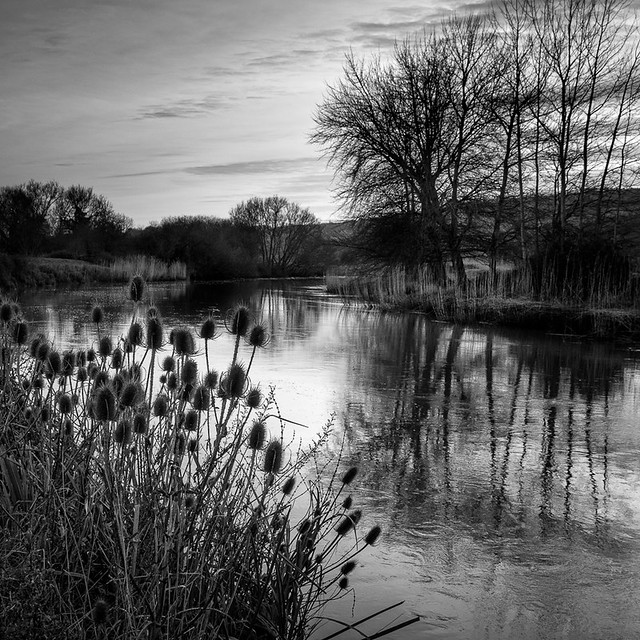
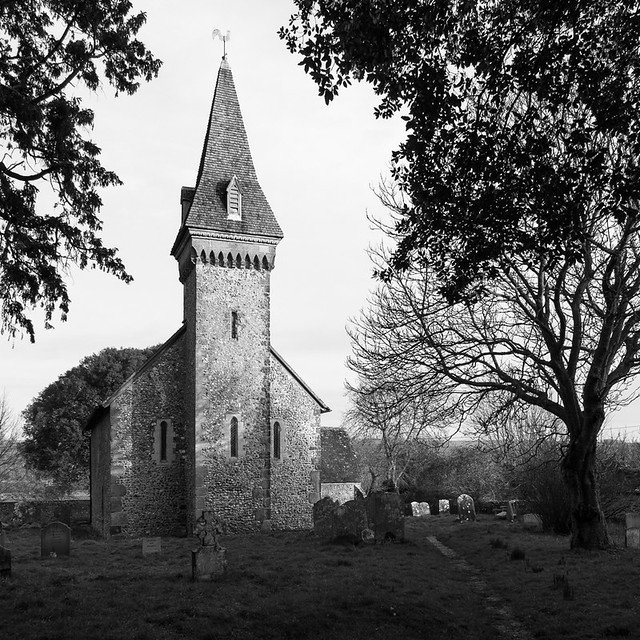
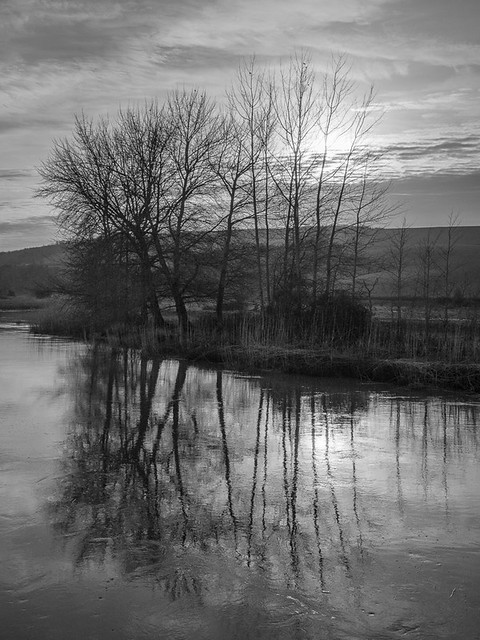
One possibility is 'churches in the landscape' and with this in mind I thought I would head off for a tiny hamlet called South Stoke, which is to the north of Arundel in West Sussex and sits alongside the River Arun. I had never been to South Stoke before, although it is clearly visible from the train between London Victoria from the South Coast.

It was a typical winter's day, the recent snow having been replaced by milder, grey and wet conditions. The church is very pretty but the image I had in mind when I studied the map, was of a church alongside the river, did not materialise. The church steeple was visible from the other side of the river bank, but other buildings and trees prevented a clear view of the church itself. However I was not going to leave the location without any images so here are a selection depicting the church and its immediate surroundings.


Winter light on the Arun

South Stoke Church
South Stoke Church

Trees by the River Arun
Trees by the Arun

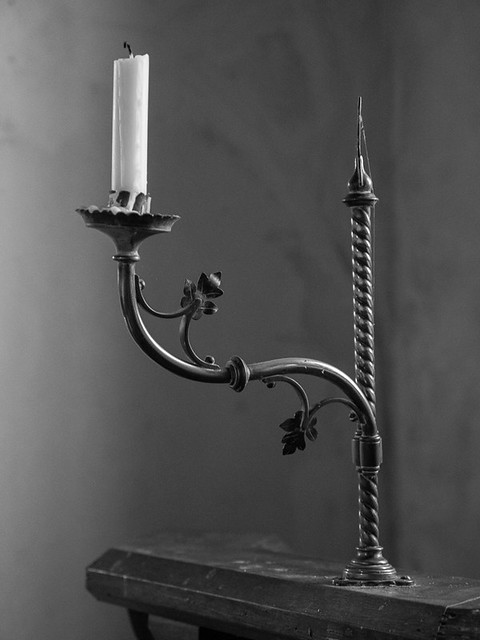
Candelabra in South Stoke Church
Candelabra inside the Church

There was one bonus while I was there - a barn owl. I switched lenses and on its maximum focal length I took a shot. Frankly it was awful and not even worthy of an appearance on this blog. It did make me think how skilled and patient nature photographers have to be, to capture these beautiful birds in flight.